Connect with us

BUSINESS

The Role of Motion Graphics in Effective Visual Storytelling

Published

on

The Role of Motion Graphics in Effective Visual Storytelling

Visual storytelling has become a cornerstone of modern communication, engaging audiences and conveying messages with clarity and emotional resonance. Motion graphics, a dynamic blend of animation, text, and design, have revolutionized the way stories are told in the digital age. This article explores the multifaceted role of motion graphics in visual storytelling, unpacking their benefits, applications, and creative potential.

The Evolution of Visual Storytelling

The art of storytelling has existed for millennia, evolving with each new technological breakthrough. From cave paintings to digital animations, the tools may have changed, but the goal remains the same: to captivate audiences and deliver impactful messages. Motion graphics, as a medium, are the latest leap in this evolutionary chain.

Motion graphics combine the precision of graphic design with the fluidity of animation, offering a visually engaging way to communicate complex ideas. In today’s fast-paced world, where attention spans are shrinking, motion graphics capture attention by presenting information in a succinct and captivating manner. They are particularly effective at transforming static visuals into dynamic narratives that resonate with modern audiences.

Furthermore, the rise of digital platforms has created new opportunities for motion graphics to shine. From social media campaigns to explainer videos, motion graphics have become an indispensable tool for brands and creators looking to engage with audiences across diverse platforms. Their versatility makes them a favorite for marketers, educators, and content creators alike.

Why Motion Graphics Excel at Storytelling

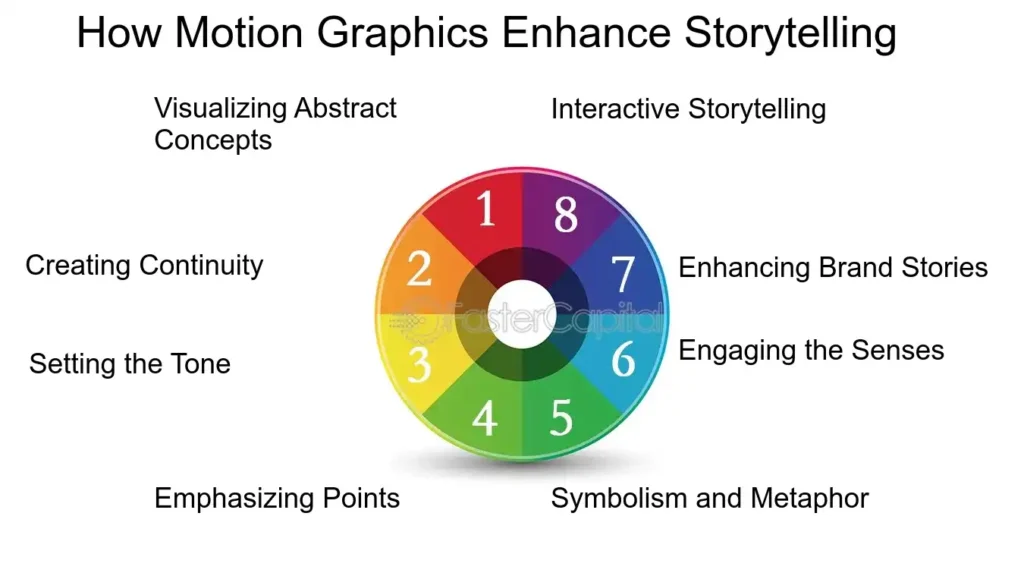
Motion graphics excel in storytelling because they simplify complexity, engage emotions, and enhance retention. Their unique ability to combine design, animation, and sound creates a multisensory experience that resonates with viewers on multiple levels.

Firstly, motion graphics make it easier to break down complex concepts. Whether explaining a product’s features or presenting data, the combination of visuals and motion turns abstract ideas into tangible, digestible narratives. 

Secondly, emotion plays a critical role in storytelling, and motion graphics are masterful at evoking feelings through color, motion, and sound design. They allow creators to shape narratives that are not only informative but also emotionally impactful. This is why industries ranging from healthcare to entertainment rely on motion graphics to make their messages memorable.

Lastly, motion graphics enhance viewer retention. Studies show that people remember information better when it’s presented visually. The movement inherent in motion graphics taps into this cognitive bias, ensuring that the story stays with the audience long after they’ve watched it.

Businesses looking to harness the power of motion graphics often turn to creative platforms like Designity, which specializes in delivering high-quality motion graphic and video solutions. Their expertise in merging storytelling with design ensures that brands can effectively engage their audiences, communicate their messages, and leave lasting impressions.

Applications Across Industries

The versatility of motion graphics makes them invaluable across a range of industries. From marketing to education, these dynamic visuals enhance storytelling by making it more engaging and accessible.

In the marketing world, motion graphics are used extensively for advertisements, product demos, and brand storytelling. Their ability to convey messages quickly and effectively aligns perfectly with the fast-paced nature of digital advertising. Brands use them to establish a unique identity and connect with their target audience in visually compelling ways.

Education is another sector where motion graphics shine. Complex subjects, such as science and technology, are often challenging to explain through static visuals or text. Motion graphics bring these topics to life, offering learners an interactive and visually engaging way to grasp difficult concepts.

The entertainment industry also benefits significantly. Title sequences, special effects, and animated infographics rely heavily on motion graphics to set the tone and build excitement. By integrating motion graphics into their productions, filmmakers and content creators can craft immersive experiences that captivate audiences from start to finish.

The Creative Process Behind Motion Graphics

Creating motion graphics is both an art and a science, requiring a blend of creativity and technical skill. The process typically begins with a deep understanding of the story to be told and the audience it aims to reach.

Storyboarding is the first step, where ideas are sketched out to create a visual plan. This stage involves deciding on the key visuals, transitions, and messages to be conveyed. The storyboard acts as a blueprint, ensuring that the final product aligns with the intended narrative.

Next comes the design phase, where visual elements such as typography, colors, and shapes are crafted. This stage is crucial for establishing the aesthetic and emotional tone of the motion graphic. Finally, the animation phase brings the designs to life, adding motion, sound, and interactivity. Each phase requires collaboration between designers, animators, and creative directors to ensure a seamless and impactful result.

Emerging Trends in Motion Graphics

The field of motion graphics is constantly evolving, with new trends and technologies reshaping the way stories are told. Staying ahead of these trends is essential for creators and brands looking to maintain a competitive edge.

One major trend is the integration of 3D elements. Advances in technology have made 3D motion graphics more accessible, allowing creators to produce visually stunning animations that add depth and realism to their stories. This trend is particularly popular in industries such as gaming and architecture.

Another emerging trend is the use of augmented reality (AR) and virtual reality (VR). Motion graphics are increasingly being used in these immersive environments to create engaging, interactive narratives. This innovation is transforming sectors like retail and education, offering new ways to connect with audiences.

Sustainability is also influencing motion graphics design. Many creators are adopting minimalist styles and eco-friendly practices, reflecting the growing demand for environmentally conscious content. This shift not only aligns with consumer values but also fosters innovation in design.

The Impact of Sound Design in Motion Graphics

While visuals are the foundation of motion graphics, sound design plays an equally vital role in enhancing their storytelling power. The combination of audio and visuals creates a richer, more immersive experience for viewers.

Music sets the tone and mood, influencing how audiences perceive the story. A well-chosen soundtrack can evoke excitement, nostalgia, or suspense, complementing the visuals to create a cohesive narrative. Similarly, sound effects add realism, making the animations feel more tangible and engaging.

Voiceovers are another critical component, especially in explainer videos and educational content. A clear, well-paced narration guides viewers through the story, ensuring they understand the message. When paired with dynamic visuals, the impact is significantly amplified.

The Future of Motion Graphics in Storytelling

As technology continues to advance, the role of motion graphics in storytelling is poised to grow even further. Innovations in artificial intelligence (AI), machine learning, and real-time rendering are set to revolutionize the way motion graphics are created and experienced.

AI-powered tools are making it easier for creators to produce high-quality motion graphics in less time. These tools can automate repetitive tasks, allowing designers to focus on the creative aspects of storytelling. Machine learning algorithms are also being used to personalize content, tailoring motion graphics to individual audience preferences.

The rise of real-time rendering technologies, such as Unreal Engine, is enabling more dynamic and interactive storytelling experiences. These tools are particularly valuable for industries like gaming and live events, where real-time visuals enhance immersion and engagement.

Finally, motion graphics are an indispensable tool in visual storytelling, offering a powerful way to communicate ideas and evoke emotions. As the field continues to evolve, its potential for creative expression and audience engagement is boundless. Whether used in marketing, education, or entertainment, motion graphics are shaping the future of storytelling in profound ways.


Continue Reading

BUSINESS

The Minimalist’s Guide to Digital Business Cards

Published

on

Digital Business Cards

Let’s be real — hauling around stacks of lifeless paper business cards and hoping they don’t get battered in your bag is so last century. Nowadays, a sleek digital business card is the modern minimalist’s secret weapon for effortless networking.

With just your smartphone and a click, you can seamlessly share all your up-to-date contact details and career credentials without wasteful printing. Even better, an interactive digital business card empowers you to book meetings, share files, process payments, and more directly.

Ready to experience the zen of an uncluttered networking flow? Let’s dive into the minimalist’s approach to crafting an impactful digital business card that upgrades your brand while aligning with an intentional, low-friction lifestyle.

Decluttering your digital business card

The core principle of minimalism is “less is more.” With limited real estate on mobile devices, you need to cut out the noise and communicate only what matters most. But don’t mistake simplicity for boring — we can inject personality and intrigue through purposeful editing.

To declutter your digital business card and focus on what’s essential:

Cut the clever job title word salad. Describe what you do in six words or less that anyone could understand, like “Airbnb Rental Business Consultant.”

Showcase only your most impressive achievements or portfolio highlights that ladder up to subject matter authority. Don’t regurgitate your entire CV.

Skip the bulky corporate bio. Offer an intriguing personal fact, provocative viewpoint, or conversation starter to humanize your brand.

Use negative space. Don’t try cramming every last detail into tiny text blocks. Leave breathing room for impactful visuals and natural visual flow.

Apply the “Mom Test.” If the information wouldn’t make sense to your mom or another non-industry friend, remove the jargon or technical complexities.

Consolidate all web presence links and workflows into a single tap-to-access portfolio site, multimedia reel, payment processing set-up, etc.

As minimalists preach, every carefully curated element should have purpose and meaning. Cut out distracting graphics, dense chunks of text, and dated formalities like physical addresses or fax numbers. You want a punchy, dynamic digital calling card that teases your essentials while sparking enough curiosity to start a conversation.

So, instead of a deluge of info like old-school paper cards, you get a crisp snapshot that’s way more digestible in this era of shortening attention spans. And you do it with style rather than sacrificing substance.

Making your digital business card an elegant experience

So, how does one avoid the pitfalls of cluttered workflows when networking via digital business cards? Like any minimalist framework, you want to remove unnecessary friction and keep things simple yet powerful.

For starters, integrate your digital business card with tools to manage contacts, schedule meetings, share files, and process transactions. The best digital business card app automatically syncs data with platforms like Google Suite, Outlook, Calendly, Box, Dropbox, PayPal, Stripe, and more.

That way, every touchpoint produces an elegant, cohesive experience without juggling disparate systems and making your connections jump through hoops. With a few taps, their workflows are streamlined through your mobile ecosystem.

For example, after exchanging sleek digital introductions, envision following up by:

  • You can book a consultation call through an embedded Calendly integration, which automatically adds it to both calendars with meeting agendas and dial-in instructions.
  • Sending a proposal via a Box folder share that also auto-emails them a notification to review it.
  • Have them purchase your service or product directly through a Stripe checkout embedded on your card.
  • Initiating a screen share or face-to-face video conference through an integrated Zoom meet link.

With these elegant outreach handoffs, everything happens seamlessly in sequential yet interwoven steps — no more tedious back-and-forth emailing, downloading confusing app links, or any other headache-inducing coordination delays. This polished simplicity fosters trust and respect for each other’s time during the momentum of initial connections.

And as a bonus for busy minimalist road warriors? Top digital business card apps compile detailed analytics to let you review contact details, engagement levels, content performance, traffic sources, and other insights for refining future touchpoints. No more stuffing stacks of half-scribbled paper cards into your pockets or bags that inevitably get crumpled, smeared, and lost.

The efficiency of a digital business card app

Paper products represent the opposite ethos of minimalism and environmental consciousness. In contrast, a stylish digital business card epitomizes modern reusability — a zero-waste asset that extends your professional identity while streamlining management into one simple app.

Plus, with its interactive functionalities, your digital card never grows obsolete like a print batch would if you pivot roles. It shapeshifts alongside you as your career evolves, conveniently shedding old details and manifesting new ones on demand.

Digitally-enabled yet remarkably uncluttered: That’s the timeless minimalist mentality that positions you as a paragon of organizational efficiency and personal branding innovation, all through the simple power of a thoughtfully crafted, elegantly executed digital business card.

So let your digital business card be the calling card MVP representing your radically pruned lifestyle approach: purposeful, polished, yet unfettered by complexities at every touchpoint.


FAQs

  • How do digital business cards align with a minimalistic lifestyle?

Digital business cards align with a minimalist lifestyle, reducing paper waste and clutter. They are easily updated and reusable assets that streamline networking workflows.

  • What should be my approach for a minimalist business card?

Focus only on details like your name, title, and key achievements. Use clean designs with plenty of white space. Remove jargon, dense text blocks, and unnecessary graphics.

  • What interactive features can I add to a digital business card?

Top digital business card apps integrate tools for booking meetings, sharing files, processing payments, video calling, and analytics tracking.

  • How do I share my digital business card?

You can share it during in-person networking by having someone scan a QR code or send it directly to their mobile device. You can add it to your email signature, website, social media profiles, and more.

  • Are digital business cards environmentally friendly?

Yes, going digital eliminates the need for endless paper printing and reduces waste. Digital cards are a reusable asset that doesn’t become quickly outdated like print materials.

Continue Reading

BUSINESS

What Causes Cavities Between Teeth and How to Avoid Them

Published

on

cavities between teeth

Cavities between teeth can sneak up on you, forming in the tight spaces that are often hard to clean. These hidden dangers arise from the build-up of plaque, a sticky film of bacteria that feasts on sugars and produces acids.

The good news is that by adopting a diligent dental hygiene routine and making conscious dietary choices, you can keep these pesky intruders at bay. Let’s dive into the causes of these cavities and explore some straightforward strategies to prevent them.

What Causes Cavities Between Teeth?

Cavities between teeth happen because of plaque buildup. Plaque is a sticky film made up of bacteria.

Plaque Buildup

Plaque is a sticky film of bacteria that forms on teeth. When you consume sugary or starchy foods, the bacteria in plaque produce acids that attack tooth enamel. This process can lead to the development of cavities. Plaque can easily accumulate between teeth where it’s harder to remove with regular brushing alone.

Poor Oral Hygiene

Poor oral hygiene means not cleaning your teeth well. If you do not brush and floss every day, food stays on your teeth. This helps plaque grow more. Plaque can cause a deep cavity between teeth. When you do not clean your mouth, plaque builds up and harms your teeth. Brushing twice a day and flossing once helps stop this.

Dry Mouth

Saliva helps neutralize acids and wash away food particles. A decrease in saliva production, which can be caused by certain medications, medical conditions, or habits like mouth breathing, can create a favorable environment for bacterial growth and cavity formation.

How to Avoid Cavities Between Teeth

Avoiding cavities between your teeth is important. It helps keep your mouth healthy and bright. There are simple steps you can take to stop these cavities from forming.

Practice Good Oral Hygiene

To keep cavities away, brush your teeth twice a day. Use a toothbrush with soft bristles and fluoride toothpaste. Be sure to clean between your teeth daily with floss. This helps remove plaque that your brush can’t reach.

Rinse your mouth with water after meals. Doing these things will help stop the stages of tooth decay before they start. Visit your dentist regularly for check-ups and cleanings. This way, your dentist can find and fix problems early.

Maintain a Healthy Diet

Eating healthy is very important to stop a root cavity and cavities between your teeth. Eat less sugary snacks like candy and cookies. Try eating more fruits and veggies instead. Drink water instead of soda or juice, as water keeps your mouth clean.

Avoid too many acidic foods, like lemons and oranges, because they can hurt your teeth. Eating cheese or yogurt can help because they protect your teeth. Simple changes in what you eat can keep your teeth strong and healthy.

Stay Hydrated

Drinking water is good for your teeth. Water helps wash away bits of food and stops plaque from growing. When you do not drink enough water, your mouth gets dry. A dry mouth can cause more cavities. Drink water often to keep your mouth wet. It is better to drink water than soda or juice. Water has no sugar, so it does not hurt your teeth. 

Learn All About Cavities Between Teeth

In conclusion, cavities between teeth can be prevented by simple habits. Brush your teeth twice every day and floss daily. Eat more fruits and veggies. Drink lots of water and less soda.

Go to your dentist for check-ups. Doing these things keeps your teeth healthy and prevents cavities. Take care of your teeth, and they will stay strong.

Visit our blog for more!

Continue Reading

BUSINESS

Understanding the Basics of Commercial Hard Money Loans: A Beginner’s Guide

Published

on

commercial hard money loans

Have you ever wondered what commercial hard money loans are and how they work?

These unique loans can be a crucial option for real estate investors and business owners. They offer fast access to funds, but they come with specific terms and conditions.

Understanding these loans can help you make better financial decisions. Read on to discover the essentials of commercial hard money loans and how you can take advantage of them.

What Are Hard Money Loans?

Hard money loans are a type of loan given by private lenders. These loans are mainly based on the value of a property, not on your credit score. This means that they can be easier to get, even if you have bad credit.

People use hard money loans when they need money quickly. These loans are often used to buy real estate. They can get approved and given out much faster than traditional commercial property loans.

However, they usually have higher interest rates. This is because they are riskier for the lender. If you need to buy a property quickly and can’t get a bank loan, this could be a good option.

Key Features

Hard money loans have several important features that set them apart from traditional loans. First, they are mostly based on the value of the property you want to buy, rather than your credit history. This makes them accessible even to individuals with poor credit scores.

Second, they have a much quicker approval and funding process. This can be very helpful in time-sensitive real estate deals.

And while they can provide funds rapidly, they usually come with higher interest rates and fees. This is because the lender takes on more risk. Lastly, these loans are generally short-term, lasting from a few months to a few years.

Loan Approval Process

The approval process for hard money loans is different from traditional bank loans. First, you need to find a private lender who offers hard money loans. Then, you apply with details about the property you want to buy and your financial situation.

The lender will review the property’s value more than your credit score. They may also want to know about your plans for the property.

If the lender decides the property is valuable enough, they will approve the loan. This process is usually fast, often taking just a few days to complete.

Interest Rates

Interest rates for hard money loans are often higher than those for traditional bank loans. This is because the lender is taking a bigger risk.

For example, while a typical bank loan might have an interest rate of 4% to 6%, a hard money loan could have an interest rate ranging from 8% to 15%. The exact rate depends on the lender and the specific deal.

Despite the higher costs, many borrowers choose hard money loans for their speed and flexibility. Being aware of these rates can help you decide if this type of loan is right for your needs.

Loan Terms

The terms of hard money loans are usually shorter than traditional loans. They often last from 6 months to a few years. You need to pay back the loan within this time frame, either in full or through regular payments.

One reason these loans are short-term is that they offer quick funding. However, they also come with higher interest rates and fees.

It’s important to clearly understand all terms before you agree to a loan. PB Financial Group is one lender that can help explain the details.

Always make sure you know the repayment schedule and any extra costs. This will help you decide if a hard money loan is the right choice for your financial needs.

Eligibility Criteria

To determine loan eligibility for a hard money loan, you need to meet certain criteria. First, you must offer a property as collateral. This means if you can’t repay the loan, the lender can take the property.

Next, even if your credit score is low, you can still qualify. Lenders focus more on the property’s value than your credit history.

You should also have a clear plan for the property, like fixing it up and selling it. Lenders want to know their money is going to good use. Being honest and clear about your intentions can help you get approved.

Advantages

Commercial hard money loans have several benefits that make them an attractive option. First, they provide quick cash.

This is great for buying a property quickly or making urgent repairs. Fast approval helps you grab opportunities without delay.

Second, they are easier to get if you have a low credit score. Lenders focus more on the property’s value, not your credit history. This makes it simpler for people who can’t get regular loans.

Lastly, hard money loans have flexible terms. You can often negotiate payment plans and loan durations to suit your needs.

Risks Involved

While commercial hard money loans offer many benefits, they also come with risks. One major risk is the higher interest rates.

You will need to pay more over time compared to traditional loans. This can be a problem if you don’t sell the property quickly.

Another issue is the short loan term. You have less time to repay the loan, which adds pressure. If you cannot pay back on time, you could lose the property.

Additionally, there are fees for getting the loan. These extra costs can add up. Always weigh these risks before choosing this type of loan.

Tips for Borrowers

When considering a hard money loan, it’s important to do your homework. Make sure you know all the details of the loan before you sign anything. This includes the interest rates, loan terms, and any fees.

If you have questions, don’t hesitate to ask the lender. It’s also a good idea to have a plan for how you will repay the loan.

This might involve selling the property or refinancing with a traditional loan. Keep in mind that these loans are short-term, so you will need to act quickly.

Understand and Start Taking Advantage of Commercial Hard Money Loans Now

Commercial hard money loans can be a valuable resource for real estate investors and business owners who need quick access to funds. By understanding the basics, you can make informed decisions and use these loans to your advantage.

Remember to consider the risks and benefits, and consult with a professional if you have any questions. Start exploring your options with commercial hard money loans today!

We hope you found this article helpful. Keep reading our blog for more helpful tips and advice.

Continue Reading

Trending