TECHNOLOGY
3 Best Computer Cloud Backup Services in 2024

Protecting your data from physical disasters is essential. Fortunately, with the best computer cloud backup services installed, you will always have an extra copy of your most crucial personal and business files stored safely and securely in the cloud.
Keeping a local online backup to prevent your data from a technical failure, malice, and an act of nature can be a reliable way to cover your bases.
The good news for customers is that many reliable online computer backup solutions offer unique selling points, such as sharing capabilities, multi-device support, and emergency-restore options. These cloud backup services for PCs sync and backup your file automatically by copying files back and forth from your computer to cloud servers that you can access from anywhere in the world.
This article discusses the 3 best computer cloud backup services, among which TeraBox is leading the chart.
What Is Computer Cloud Backup?
Computer cloud backup, or online or remote backup, sends a copy of your critical data files or database to a secondary, offsite location in case of equipment failure, site catastrophe, or human error. A third-party cloud or SaaS provider hosts the cloud backup server and data storage system and charges the cloud backup customer a recurring fee. The fee is based on the cloud storage space or capacity used, data transmission bandwidth, number of users, number of servers, or the number of times data is retrieved.
Implementing cloud data backup solutions can help bolster businesses’
- Data protection
- Business continuance
- Regulatory compliance strategies without overburdening the IT staff.
These labor-saving benefits can be enough of a consideration to offset some of the extra charges associated with cloud backup, such as data transmission. Most of the computer data cloud storage and backup solutions offer subscription plans on a monthly or yearly basis. Usually, individual consumers and home offices benefit from these services. However, these online backup services for computers are now commonly used by SMBs and larger enterprises to back up some forms of data. For large businesses, cloud data backup can be a tremendous supplementary form of backup.
What Makes The Best Computer Cloud Backup Services?
A computer cloud backup for business is like an insurance policy for your data. It provides features to ensure data safety, security, storage, and affordability. Several factors determine the quality of cloud backup service. Here are the key factors that make the best computer cloud backup service lead the chart:
- Automatic Backups for All Types of Files: The best cloud backup service for computers offers automatic backup and file restoration options and keeps your data protected with the latest file versions.
- End-To-End Encryption: Backup services for personal computers ensure end-to-end encryption through AES-256 encryption and two-factor authentication to protect your data during transmission and at rest.
- Budget-Friendly Storage Plans and Unlimited Cloud Backup Options: An excellent service offers unlimited cloud backup options at reasonable prices that can scale according to the user’s needs.
- Great File Upload and Download Speed: The best cloud backup service for computers offers bandwidth control features that help users upload and download files quickly.
- Easy-To-Use Interface: Convenient remote computer backup services have an easy-to-use interface that makes managing and restoring backups easy, even for non-technical users.
- Robust Customer Support: Ensuring robust 24/7 customer support through live chat, phone, and email also helps cloud backup services lead the chart. They can answer FAQs, provide guides and video tutorials, and offer forums to resolve common issues independently.
- Full System Recovery: An excellent backup service for PCs offers options for backing up individual files and full system recovery, including operating systems, settings, and applications.
The Best Computer Cloud Backup Services of 2024
Whether you want to backup multiple computers or just one, here are the best computer cloud backup services to meet your needs and workflow.
TeraBox: The Best Cloud Backup Solution for Computers
Specifications:
Storage limit: unlimited cloud storage
Mobile Backups: Available
System and Application Backups: Yes
Number of Devices: Unlimited
Two-Factor-Authentication (2FA): Yes
PROS:
- It offers 1TB of free cloud backup space, which you can use to back up and restore critical data files from your computer.
- Automatic cloud backup options, syncing the latest versions of your files
- End-to-end encryption with two-factor authentication and an advanced AI algorithm that ensures the safety of your data.
- Offers restoration of any size of files.
- Additional file security through Personal Vault.
- High file download and upload speed.
- 24/7 robust customer support.
- Unlimited cloud backup storage at a reasonable price.
- It is an intuitive and easy-to-use interface that even non-technical users can use efficiently.
- Multi-device support, including Android, Windows, macOS, iOS, and Linux
CONS:
- Shows ads
Why We Picked It?
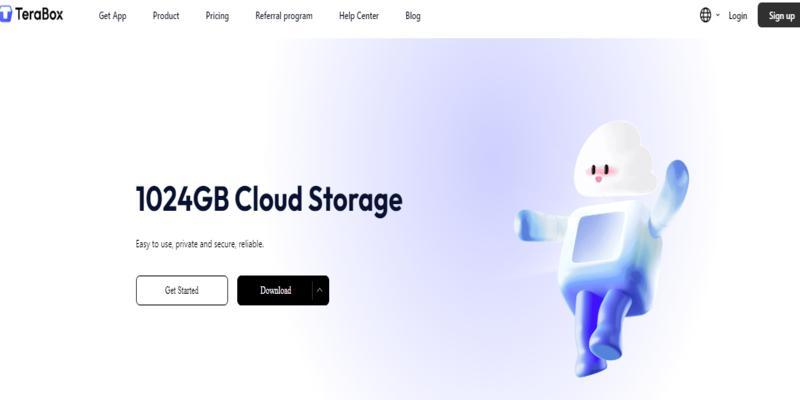
With 1024 GB of free cloud backup storage for computers, TeraBox is a great offsite computer data storage option. It automatically backs up files from your computer and stores them on its remote servers for longer use. Your important data files, including photos, high-resolution videos, documents, PDFs, and all other kinds of data, are encrypted with two-factor authentication, AI analysis, and Personal Vault.
Its multi-device support for Android, Windows, macOS, Linux, and iOS makes it a great choice for both individual users and businesses.
Backblaze
Specifications:
Storage limit: Unlimited
Number of devices: 1
Mobile device backups: No
System and Application Backups: No
2-FA: Yes
PROS:
- Fast, cheap, and easy
- Unlimited backup storage
- Excellent drive-shipping policy
CONS:
- There are no backup plans for multiple computers.
- Mobile apps are not user-friendly.
Why We Picked It?
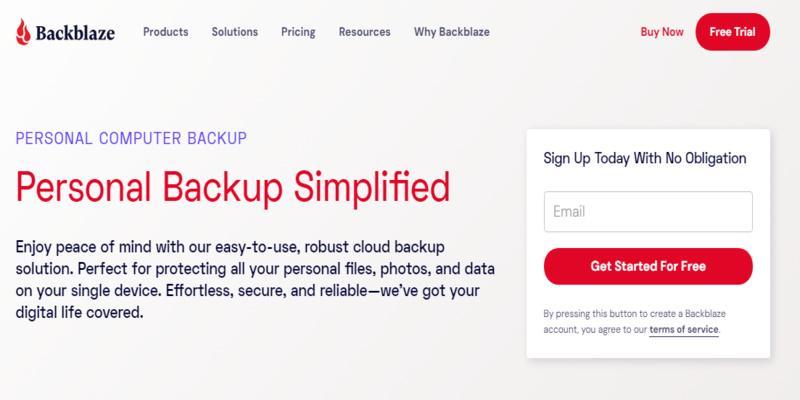
Backblaze is one of the cheapest cloud backup solutions for computers. It is easy to use, offers a generous restore-by-email feature, and offers rapid file upload speeds. You can also locate your lost or stolen computer by geo-locating the Wi-Fi network it connects to.
However, Backblaze lacks cloud syncing, file-sharing, and backups of networked devices, making it unsuitable for individuals with multiple machines to back up. Individuals with high backup storage needs will have to subscribe to Backblaze’s yearly plans, which are also costly.
Acronis True Image
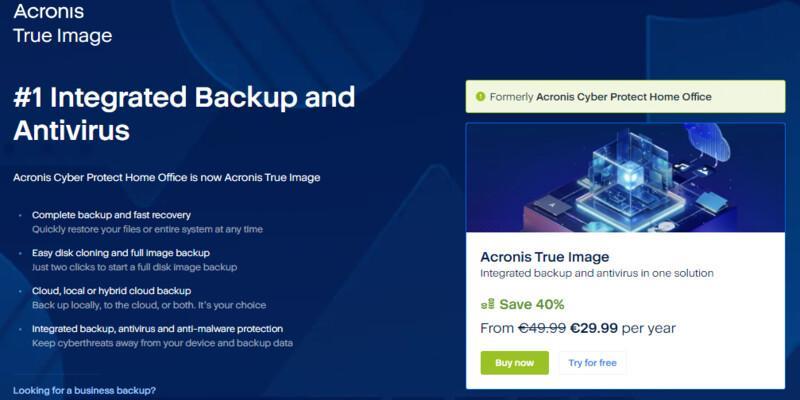
Specifications:
Storage limit: 5 TB
Device limit: Up to 5 computers, unlimited mobile devices
Mobile backups: Yes
System and Application Backups: Yes
2-FA: No
Remote shipping: No
PROS:
- Extensive and unique set of features
- Intuitive and user-friendly interface
- Does not impair the system’s performance
CONS:
- Expensive backup plans
- Not suitable for individual users
Why We Picked It?
Acronis True Image, now known as Acronis Cyber Protect Home Office, is a powerful and versatile online cloud-backup solution for PCs. It offers a great desktop application and a huge number of backup and security options.
Users can back up their mobile devices, external drives, and social media accounts and easily sync and share files. This excellent service saves your files through antivirus software, ransomware protection, a vulnerability scanner, and a bootable file-restoration tool.
However, its expensive cloud backup plans and weak web and mobile interface make it not an ideal choice.
When compared to these data sync and backup services, TeraBox is clearly one of the best computer cloud backup services, with its intuitive interface, economical backup plans, high file security, and unlimited cloud storage.
How to Cloud Backup Computer With TeraBox?
With TeraBox, you can easily cloud backup your computer using simple steps. These steps include:
- First, sign in to your TeraBox account. If you don’t have an account, create one.
- After signing in, a menu will appear. From the menu, click on the “Plus” icon at the bottom left of your screen.
- Choose the type of file you want to backup from the drop-down menu.
- Select the number of files you want to restore.
You can also set your files and folders on auto-backup. For auto-backup, follow these steps:
- Click on your avatar from the top left corner.
- Click on “Automatic Backup” from the menu that appears.
- Slide to toggle right to enable automatic backup on your computer.
The method is the same for backing up your files on both mobile and computer.
You can also get help from this video tutorial.
The Bottom Line
In conclusion, the best computer cloud backup services offer high security, multi-device support, end-to-end encryption, and unlimited cloud backup options. Among the multiple services available, TeraBox stands tall as it provides all the features that the best cloud backup service should offer.
Its unlimited cloud backup options, multi-device support, unlimited free cloud backup storage, high security through two-factor authentication, and another algorithm make it ideal for individuals and businesses to back up their files.
FAQs
Are cloud backup services for computers safe?
Yes! Computer cloud backup services are safe. TeraBox is the best, offering additional security against cyberattacks through end-to-end encryption and two-factor authentication.
Do you need to back up all the data on your computer?
You should back up the data that you don’t want to lose because natural disasters, technical issues, and human errors can happen at any time. So, backup your important data regularly.


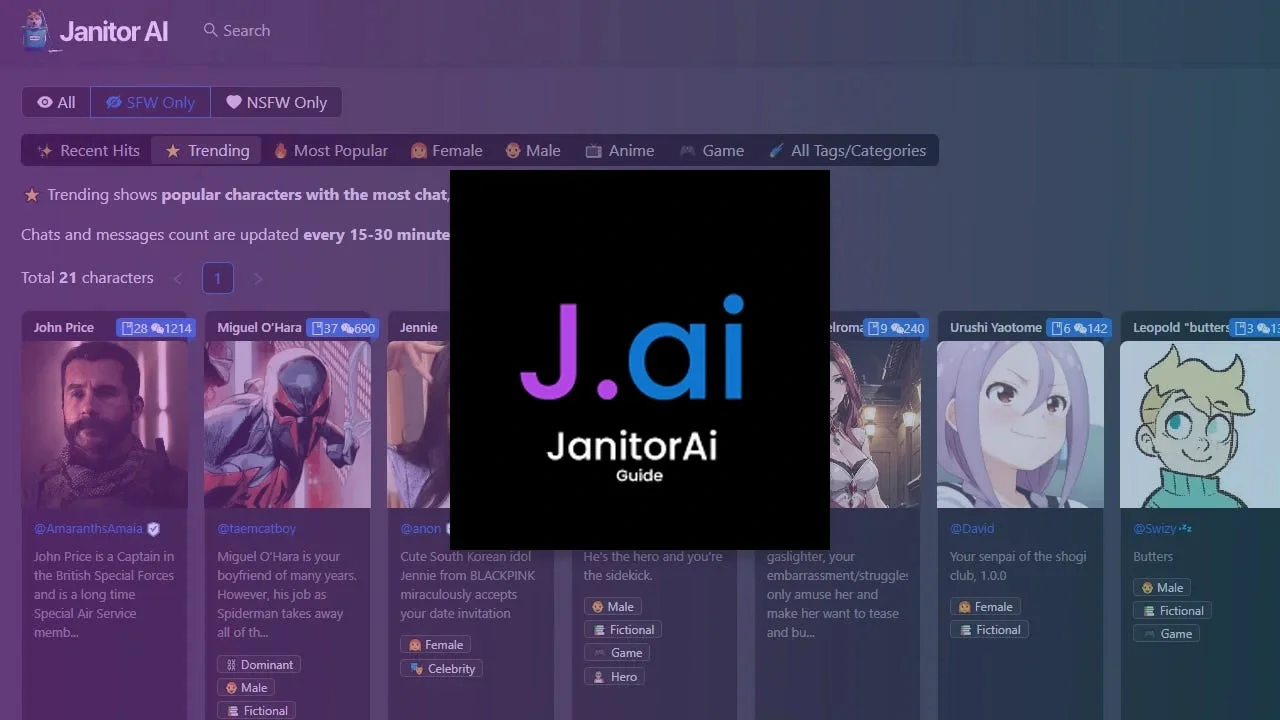
Janitor AI is a chatbot website with a unique anime-style character. Users can chat with other people’s characters or create their own. What sets Janitor AI apart is its support for NSFW roles, which is appealing to many users. Users can make money through chat services on Janitor AI, adding diversity to the character experience. However, the NSFW support also raises security concerns.
Janitor AI: A Unique Chatbot Experience
Janitor AI offers a unique chatbot experience through its anime-style character chat robot website. Users have the option to create their own characters or engage in conversations with other users’ created characters. What sets Janitor AI apart from other AI chatbots is its support for NSFW roles, allowing users to break through traditional security norms and explore more daring interactions. This feature has proven to be attractive to many users seeking a different kind of chatbot experience. While Janitor AI provides an opportunity for users to monetize their characters through chat services, the support for NSFW content also raises concerns about potential security issues.
Janitor AI Features
Janitor AI is an innovative platform that offers various features for users to interact with its anime-style character chat robot. Users can engage in conversations with the Janitor AI, create their own unique characters, or even chat with characters created by other users. The platform not only provides a fun and interactive experience but also allows users to generate income through chat services. This feature promotes diversity and enhances the overall character experience on Janitor AI, making it a popular choice for those looking to engage in creative and entertaining interactions online.
Diverse character styles
Janitor AI is a unique website that offers a diverse range of character styles through its anime-style chat robot feature. Users have the option to create their own customized characters or engage in conversations with other user-created characters. The platform also allows users to monetize their chat services, offering a creative way for individuals to earn money while enhancing the overall character diversity and user experience on Janitor AI. This innovative concept not only fosters creativity but also promotes a sense of community among users who share a passion for engaging with virtual characters.
Character marketization
Janitor AI is a unique website that offers a character marketization platform with its anime-style character chat robot feature. Users have the option to create their own characters or interact directly with other users’ created characters. This innovative concept allows everyone to not only enjoy chatting with various characters but also earn money by providing chat services. By fostering diversity and enhancing the overall user experience, Janitor AI opens up new opportunities for both creators and consumers in the digital world.
Adult content availability
Janitor AI is a unique website that offers adult content availability through its anime-style character chat robot, Janitorai. Users have the option to create their own characters or engage in conversations with other users’ created characters. The platform allows everyone to participate in creating characters and provides opportunities to earn money through chat services. This feature not only enhances the diversity of characters but also enriches the overall user experience on Janitor AI.
Local deployment option
Janitor AI offers a local deployment option for users to interact with its anime-style character chat robot website. Users can engage with the Janitor AI, a free service that allows them to create their own characters or chat directly with other users’ created characters. This platform provides an opportunity for everyone to not only explore diverse character creations but also potentially earn money through chat services. By enhancing the overall experience and diversity of characters available, Janitor AI aims to provide a unique and engaging online environment for users to connect and express themselves creatively.
Benefits of Using Janitor AI
Janitor AI is a unique anime-style character chat robot website that offers numerous benefits to its users. Not only can individuals create their own personalized characters, but they can also engage in conversations with other users’ created characters. The platform allows for a diverse and enriched experience, giving everyone the opportunity to showcase their creativity and interact with a wide range of characters. Additionally, users have the chance to make money through chat services on Janitor AI, further enhancing the appeal and utility of this innovative platform.
Personalized chat experience
Janitor AI offers a unique and personalized chat experience through its innovative AI technology. Users can interact with the Janitor AI, a charming anime-style character chat robot, for free on the website. Whether it’s seeking assistance with cleaning tips or simply engaging in casual conversation, Janitor AI is there to provide support and entertainment. The janitorai platform allows users to enjoy a fun and interactive experience while receiving helpful information and guidance from this virtual assistant.
Income generation opportunities
Janitor AI is a cutting-edge income generation opportunity that offers a free and innovative chatbot service. This unique AI, designed as an anime-style character, has quickly gained popularity for its ability to provide efficient cleaning solutions through interactive conversations. Users can access Janitor AI’s services through a chat platform, making it easy and convenient to receive assistance with various cleaning tasks. The combination of technology and creativity in Janitor AI makes it stand out as a versatile tool for both personal and commercial use.
Enhanced character diversity
Janitor AI is a unique anime-style character chat robot website that offers enhanced character diversity. Users can interact with the Janitor AI for free and engage in conversations through the Janitor AI chat feature. This innovative technology brings a fun and interactive element to online communication, allowing users to experience a unique and engaging way to connect with others. The Janitor AI adds a creative twist to traditional chat platforms, offering users an entertaining and personalized experience unlike any other.
Concerns and Challenges
One of the concerns and challenges surrounding the Janitor AI website is the potential impact of offering a free chat service with an anime-style character. While the novelty and entertainment value of interacting with an AI chatbot in this unique format may attract users, there are worries about the reliability and effectiveness of such a system. Additionally, there may be ethical considerations regarding the use of anime-style characters for customer service interactions. As Janitor AI continues to develop and refine its services, addressing these concerns will be crucial to ensuring a positive user experience and maintaining trust in the platform.
Security risks with NSFW content
The use of NSFW content on the Janitor AI website poses significant security risks for both the users and the platform itself. Such content can attract malicious actors and expose users to potential harm, such as phishing attacks or malware distribution. Additionally, the anime-style character chat robot format of Janitor AI may inadvertently make users more susceptible to engaging with risky content, as the cute and friendly appearance of the AI may lower their guard. It is crucial for the platform to implement strict security measures and moderation protocols to protect its users from these dangers.
Potential misuse of adult themes
There is a concern about the potential misuse of adult themes on the Janitor AI website, which features an anime-style character chat robot. The playful and colorful design of the website may attract younger audiences who could inadvertently stumble upon inappropriate content. It is important for the creators of Janitor AI to implement strict moderation measures to ensure that users are not exposed to any harmful or explicit material while interacting with the chatbot. Balancing the whimsical nature of the anime character with responsible content management will be crucial in maintaining a safe and enjoyable experience for all users.
Conclusion:
The Janitor AI Chatbot offers a range of unique features that set it apart from other chatbots in the market. Its advanced algorithms and machine learning capabilities allow for efficient and accurate responses to user queries. The free version of Janitor AI provides a valuable opportunity for businesses to experience its benefits without financial commitment. With its user-friendly interface and customizable options, Janitor AI is a powerful tool for enhancing customer service and streamlining operations. To take advantage of the innovative features of Janitor AI Chatbot, businesses are encouraged to explore its capabilities and integrate it into their workflow today.

In the dynamic world of academic and professional writing, where the pressure to deliver high-quality, plagiarism-free, and engaging content is ever-present, the arrival of AI-powered essay writing tools has revolutionized the way we approach the written word. Among these groundbreaking advancements, EssayGPT stands out as a beacon of innovation, offering a suite of writing tools designed to cater to a myriad of writing needs. In this detailed review, we delve into the intricacies of EssayGPT, exploring its features, usability, and overall impact on the writing process.
What is EssayGPT?

A Multi-Faceted Writing Companion
At its core, EssayGPT is an AI essay writer that promises to generate plagiarism-free essays across a variety of disciplines and topics. Beyond mere essay writing, this AI-powered platform extends its capabilities to rewriting, summarizing, extending, and even generating thesis statements, making it a one-stop solution for students, academics, educators, content writers, and business professionals alike.
Cutting-Edge AI at Your Fingertips
Utilizing advanced natural language processing algorithms and machine learning techniques, EssayGPT analyzes the structure and style of any given topic, tapping into vast internet resources to produce well-researched and coherently structured essays. The tool not only adheres to grammatical and stylistic norms but also adjusts according to the contextual relevance of the topic and the target audience’s expectations.
Experiencing EssayGPT: A User’s Perspective
Accessibility and User Interface
Navigating through EssayGPT’s dashboard is a breeze, thanks to its clean and intuitive user interface. The ease of access, coupled with the tool’s web-based nature, allows users to start generating content without the hassle of sign-ups or subscriptions. This seamless accessibility underscores EssayGPT’s commitment to user convenience and efficiency.
A Symphony of Writing Tools
Academic Writing and Beyond
With an arsenal of features tailored for diverse writing demands, EssayGPT offers everything from essay checkers and rewriters to hook generators and research paper summarizers. Each tool is designed to enhance the writing process, whether by injecting creativity, ensuring originality, or simplifying complex subjects.
Customization and Precision
One of EssayGPT’s standout aspects is the level of customization it offers. Users can specify their target audience, desired tone, reference style, and essay type. This customization ensures that the output not only meets the specific requirements but also resonates with the intended readership.
Harnessing the Power of EssayGPT

A Boon for Students and Educators
For students grappling with tight deadlines and complex topics, EssayGPT emerges as a powerful ally, offering swift and insightful assistance in essay construction and research exploration. Educators, on the other hand, can leverage this tool to generate engaging example essays and stimulate creativity among their students.
A New Horizon for Professionals
Content creators and business professionals can utilize EssayGPT to maintain a consistent flow of high-quality writing, be it in the form of blog posts, reports, or marketing content. The ability to generate content across languages further amplifies its utility, breaking down linguistic barriers and expanding audience reach.
The Verdict: Transforming Writing with AI
Accelerating Creativity and Productivity
EssayGPT unmistakably accelerates the essay-writing process, marrying speed with sophistication. The rapid generation of well-structured, coherent, and customized content not only saves time but also allows for a more efficient allocation of creative energies towards refining and personalizing essays.
The Multilingual Maestro
With support for multiple languages, EssayGPT is a testament to the evolving capabilities of AI in bridging communication gaps. This feature is particularly beneficial for non-native speakers and professionals targeting global audiences.
Continuous Learning and Improvement
The essence of EssayGPT’s innovation lies in its capacity for growth. By learning from previous interactions and continuously updating its database and algorithms, EssayGPT ensures that the quality of essays remains high, fostering a cycle of constant improvement.
Conclusion: A Leap Towards the Future of Writing
EssayGPT stands as a testament to the transformative power of AI in the realm of writing. By offering a comprehensive suite of tools designed to address varied writing needs, it democratizes access to high-quality, customized, and engaging content. Whether you are a student, educator, professional writer, or business executive, EssayGPT equips you with the means to elevate your writing, making the process not just easier, but also more creative and fulfilling.
In the competitive and fast-paced world we navigate, EssayGPT serves as more than just a tool; it’s a partner in creativity, a catalyst for innovation, and a gateway to endless possibilities in the art of writing. As we continue to explore and embrace these AI-driven advancements, the future of writing looks not only brighter but boundless.
In the digital era, where data breaches and cyber threats loom large, securing your online presence is paramount. One of the foundational steps towards a fortified digital defense is the acquisition of an SSL (Secure Sockets Layer) certificate. This guide will navigate you through the why, how, and where of buying an SSL certificate, ensuring your website is a safe harbor in the vast ocean of the internet.
Why Buy an SSL Certificate?
An SSL certificate is not just a luxury; it’s a necessity for any website owner. Here’s why:
Enhanced Security: SSL certificates encrypt the data transmitted between your website and its visitors, safeguarding sensitive information from cybercriminals.
Boosted Credibility: A visible padlock icon in the browser bar signifies trust and authenticity, reassuring visitors of the safety of their data.
Improved SEO Rankings: Search engines, like Google, prioritize secure websites. An SSL certificate can, therefore, enhance your site’s visibility.
Compliance: Many regulatory frameworks require SSL encryption as a standard for data protection, making it essential for compliance.
How to Choose the Right SSL Certificate?
Selecting the right SSL certificate involves understanding the different types available and assessing your website’s needs:
Domain Validated (DV) Certificates: Ideal for blogs and personal websites, DV certificates offer a basic level of encryption and are usually issued quickly.
Organization Validated (OV) Certificates: Suited for businesses and organizations, OV certificates provide a higher level of security by validating the owning entity’s legitimacy.
Extended Validation (EV) Certificates: Offering the highest level of trust and security, EV certificates are perfect for e-commerce websites and large enterprises, requiring thorough validation of the business’s existence and operations.
The Buying Process
Purchasing an SSL certificate involves a few key steps:
Assess Your Needs: Determine the level of security and validation your website requires.
Choose a Reputable Certificate Authority (CA): Look for CAs with robust support, impeccable reputation, and a wide range of products.
Generate a Certificate Signing Request (CSR): Your web hosting service can help you generate a CSR, a prerequisite for buying an SSL certificate.
Select Your SSL Certificate: Based on your needs, choose between DV, OV, or EV certificates.
Install the Certificate: Once issued, install the certificate on your server. Most web hosting providers offer assistance with this step.
Where to Buy an SSL Certificate?
SSL certificates can be purchased directly from Certificate Authorities or through third-party vendors and web hosting providers. Prices and services vary, so it’s advisable to research and compare options. Some popular CAs include:
Let’s Encrypt: Offers free, automated, and open DV certificates, ideal for individuals and small projects.
Comodo: Provides a range of affordable certificates suitable for businesses of all sizes.
Symantec: Known for high-end security solutions, ideal for large enterprises requiring EV certificates.
Also Read : Pi123
Conclusion
In conclusion, an SSL certificate is a critical investment for anyone looking to secure their online presence. By understanding the types of certificates available and the purchasing process, you can make an informed decision that best suits your needs. Remember, in the realm of digital security, an SSL certificate is your first line of defense, ensuring that your website remains a trusted and secure place for your visitors.




 ENTERTAINMENT4 days ago
Exploring the Kristen Archives: A Treasure Trove of Erotica and More

 ENTERTAINMENT1 day ago
Kiss KH: The Streaming Platform Redefining Digital Engagement and Cultural Currents
- EDUCATION1 day ago
Lingrohub Platform: A Complete Student Access Guide
- LIFESTYLE4 months ago
The Disciplinary Wives Club: Spanking for Love, Not Punishment
- TECHNOLOGY24 hours ago
Casibom: The Digital Alchemy Reshaping Systems, Society, and Self

 TECHNOLOGY23 hours ago
Securing Your Online Presence: The Ultimate Guide to Buying an SSL Certificate

 LIFESTYLE23 hours ago
Tips for Prolonging the Lifespan of Truck Roll-Up Door Rollers
- TECHNOLOGY4 months ago
Blog Arcy Art: Where Architecture Meets Art