BUSINESS
Essential Insights into Conveyor Impact Rollers

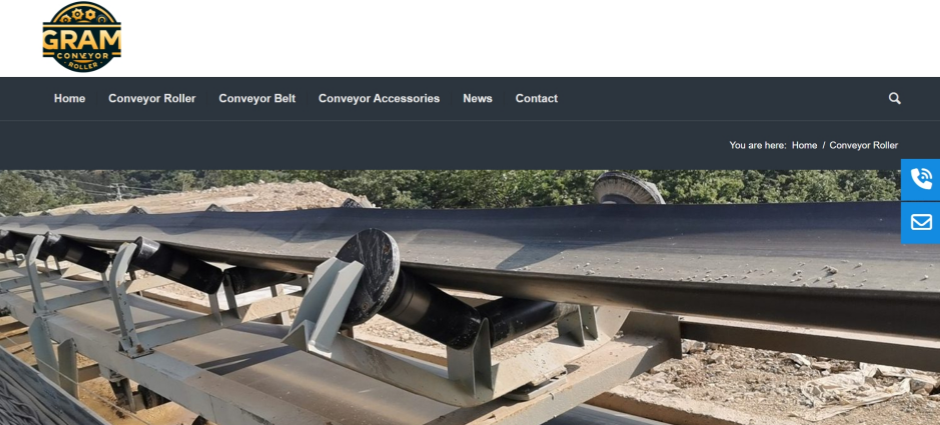
Conveyor impact rollers are specialized components designed to absorb and dissipate the impact forces from heavy, abrasive, or sharp materials being loaded onto conveyor belts. These conveyor rollers play a crucial role in protecting the conveyor system, reducing wear and tear, and ensuring efficient operation. Nylon conveyor rollers, on the other hand, are made from durable synthetic polymers known for their strength, lightweight properties, and resistance to corrosion and chemicals. These conveyor rollers are highly relevant in modern industries where hygiene, maintenance, and operational efficiency are paramount. Nylon rollers offer several advantages, including enhanced durability, reduced noise, and lower maintenance costs, making them indispensable in sectors such as food processing, pharmaceuticals, packaging, and automotive manufacturing.
Key Features of Conveyor Impact Rollers
Conveyor impact rollers are crucial components designed to endure harsh industrial environments and protect conveyor systems from damage caused by heavy, abrasive, or sharp materials.
Design and Construction
Core Material: Impact rollers typically feature a robust core made from high-strength steel or aluminum. This core provides the necessary structural integrity to handle substantial loads without deforming.
Cushioning Layer: Surrounding the core is a thick layer of shock-absorbing material, such as rubber or polyurethane. This layer is essential for dissipating the energy from impacts, thereby reducing the stress on the conveyor belt.
Sealed Bearings: High-quality impact rollers often include sealed bearings to protect against dust and debris. Sealed bearings ensure smooth rotation and extend the lifespan of the rollers by reducing wear and tear.
Impact Absorption Capabilities
Energy Dissipation: The primary function of impact rollers is to absorb and dissipate the kinetic energy from heavy and fast-moving materials. The cushioning layer compresses upon impact, spreading the force over a larger area and minimizing the impact on the conveyor belt.
Protection of Conveyor System: By absorbing these forces, impact rollers prevent damage to the conveyor belt and structure, reducing maintenance needs and extending the overall lifespan of the system.
Common Sizes and Dimensions
Variety of Sizes: Impact rollers are available in a range of sizes and dimensions to accommodate different conveyor systems. Common diameters range from 50mm to 200mm, with lengths varying to fit specific conveyor widths.
Custom Dimensions: Custom-sized impact rollers can be manufactured to meet unique requirements, ensuring compatibility with specialized conveyor setups and specific operational needs.
Role of Nylon in Impact Rollers
Material Benefits: Incorporating nylon into impact rollers offers several advantages. Nylon is lightweight yet strong, providing durability without adding significant weight to the conveyor system. This reduces the overall load and energy consumption.
Corrosion Resistance: Nylon is highly resistant to corrosion, making it ideal for use in environments where exposure to moisture, chemicals, and other corrosive substances is common.
Low Friction and Noise: Nylon’s low friction coefficient ensures smooth operation, reducing wear on both the rollers and the conveyor belt. Additionally, nylon helps in minimizing operational noise, contributing to a quieter and more comfortable working environment.
Extended Lifespan: The durability and resistance of nylon to various industrial stresses ensure that nylon impact rollers have a longer lifespan, resulting in lower maintenance costs and reduced downtime.
In summary, the key features of conveyor impact rollers include their robust design and construction, effective impact absorption capabilities, availability in various sizes and dimensions, and the significant role of nylon in enhancing performance. These features make impact rollers indispensable in protecting conveyor systems and ensuring efficient, long-term operation across various industrial applications.

Applications of Conveyor Impact Rollers
Conveyor impact rollers are essential in various heavy-duty industries, providing crucial protection and efficiency improvements in environments where the material handling process involves significant impact and stress.
Mining
Role in Mining Operations: In the mining industry, conveyor systems are used to transport heavy and abrasive materials such as ore, coal, and gravel. Impact rollers are strategically placed at loading points to absorb the shock from falling materials.
Benefits: By mitigating the impact forces, these rollers protect the conveyor belt and structure from damage, reducing maintenance needs and downtime. This is particularly important in mining, where equipment reliability is critical for continuous operations.
Integration of Nylon Rollers: Nylon conveyor rollers are also utilized in mining for their durability and corrosion resistance. They are often used in conjunction with impact rollers to ensure smooth, efficient material transport, especially in areas with exposure to moisture and chemicals.

Construction
Role in Construction Sites: Construction sites involve the handling of heavy materials such as concrete, steel beams, and aggregate. Conveyor systems equipped with impact rollers are used to transport these materials efficiently and safely.
Benefits: Impact rollers at loading points prevent damage to the conveyor belt from the high-impact loads common in construction, ensuring a longer lifespan and reduced operational costs.
Integration of Nylon Rollers: Nylon rollers are employed in construction conveyor systems for their lightweight and easy maintenance properties. They help reduce the overall weight of the conveyor system, making it more energy-efficient and easier to install and maintain.
Heavy Manufacturing
Role in Manufacturing Plants: Heavy manufacturing industries, such as automotive and machinery production, require the movement of large, heavy components. Impact rollers are crucial in these settings to handle the impact of loading and unloading heavy parts.
Benefits: These rollers absorb shock and reduce the risk of conveyor belt damage, maintaining smooth operation and minimizing interruptions in the manufacturing process.
Integration of Nylon Rollers: Nylon conveyor rollers are integrated into these systems to provide smooth, quiet operation and resistance to chemicals and oils commonly used in manufacturing processes. This combination ensures both durability and efficiency.
Integration of Nylon Conveyor Rollers in These Applications
Complementary Use: In all these industries, nylon conveyor rollers complement impact rollers by providing additional benefits such as corrosion resistance, lightweight construction, and reduced noise levels. This integration enhances the overall performance of the conveyor system.
Specific Roles: While impact rollers handle the heavy impact and load-bearing functions, nylon rollers are used in other parts of the conveyor system to ensure smooth and efficient transport, especially in areas where the risk of chemical exposure and moisture is high.
Efficiency and Maintenance: The use of nylon rollers reduces the wear on conveyor belts and other components, leading to lower maintenance costs and longer system lifespans. This is particularly beneficial in industries where operational efficiency and minimal downtime are crucial.
Conveyor impact rollers are indispensable in industries such as mining, construction, and heavy manufacturing due to their ability to absorb shock and protect conveyor systems. The integration of nylon conveyor rollers in these applications further enhances system performance, offering durability, corrosion resistance, and reduced maintenance needs. Together, impact and nylon rollers create a robust, efficient conveyor system capable of handling the demands of heavy-duty industrial environments.
Sizing and Selection of Conveyor Impact Rollers
Selecting the correct size and type of conveyor impact rollers is crucial for ensuring the efficiency and longevity of your conveyor system. Here’s a detailed guide on the importance of correct sizing, how to choose the right size, available customization options, and the benefits of nylon material in impact roller customization.
Importance of Correct Sizing
Optimal Performance: Correctly sized impact rollers ensure optimal performance by providing the necessary support and impact absorption tailored to the specific needs of the conveyor system. Improperly sized rollers can lead to inadequate impact absorption, increased wear and tear, and potential damage to the conveyor belt and structure.
Load Capacity: Ensuring the rollers are the right size for the load they will carry prevents overloading, which can cause premature failure of the rollers and associated conveyor components.
Operational Efficiency: Proper sizing contributes to the smooth operation of the conveyor, minimizing downtime and maintenance costs. It also ensures that the materials are transported efficiently without causing undue stress on the system.
Guide to Choosing the Right Size
Assessing Load Requirements: Determine the maximum weight and type of materials the conveyor will handle. This information is essential for selecting rollers that can support the load without deforming or failing.
Conveyor Dimensions: Measure the width and length of the conveyor system to ensure that the rollers fit correctly. The diameter and length of the rollers must match the dimensions of the conveyor frame and the width of the belt.
Impact Zone Analysis: Identify the high-impact zones where materials are loaded onto the conveyor. These areas require rollers with enhanced impact absorption capabilities. Consider factors such as drop height and material speed.
Roller Material and Design: Choose rollers made from materials that can withstand the environmental conditions and operational demands. For example, in corrosive environments, nylon rollers are preferable due to their chemical resistance.
Customization Options
Custom Dimensions: Manufacturers offer customization of roller dimensions to fit non-standard conveyor systems. This includes specific diameters, lengths, and shaft sizes tailored to unique requirements.
Material Selection: Customization can include the choice of materials for both the core and the cushioning layer. Options such as steel cores with nylon or rubber cushioning provide a balance of strength and impact absorption.
Enhanced Features: Custom features such as additional sealing, specialized bearings, and specific surface coatings can be added to meet the operational and environmental demands of the application.
Color and Branding: Custom colors and branding options are available for easy identification and integration into existing conveyor systems.
Benefits of Nylon Material in Impact Roller Customization
Durability and Strength: Nylon provides excellent durability and impact resistance, making it suitable for high-impact applications. Its strength ensures that the rollers maintain their shape and functionality under heavy loads.
Corrosion Resistance: Nylon’s resistance to chemicals, moisture, and corrosive substances makes it ideal for use in harsh environments. This extends the lifespan of the rollers and reduces maintenance costs.
Lightweight: Nylon is lighter than many other materials, reducing the overall weight of the conveyor system. This improves energy efficiency and makes installation and maintenance easier.
Low Friction and Noise: Nylon’s low friction coefficient ensures smooth operation, reducing wear on the conveyor belt and minimizing noise levels. This is beneficial in environments where noise reduction is important.
Versatility: Nylon can be easily molded and customized to specific shapes and sizes, providing flexibility in design and allowing for tailored solutions that meet specific operational needs.
The correct sizing and selection of conveyor impact rollers are vital for the efficient and reliable operation of conveyor systems. Understanding load requirements, conveyor dimensions, and impact zones helps in choosing the right size. Customization options allow for tailored solutions, and the use of nylon material offers significant benefits, including durability, corrosion resistance, lightweight, and low friction. By carefully selecting and customizing impact rollers, businesses can enhance the performance and longevity of their conveyor systems.
Top Conveyor Impact Roller Manufacturers
Choosing the right conveyor impact roller manufacturer is essential to ensure the quality, reliability, and efficiency of your conveyor system. Here are some of the top manufacturers in the industry, along with their innovations, quality considerations, and focus on nylon conveyor rollers.
Market Leaders
GRAM Conveyor
Overview: GRAM Conveyor is renowned for its high-quality conveyor rollers and extensive industry experience. They are recognized for their commitment to innovation, quality, and customer satisfaction.
Innovations: GRAM Conveyor has developed advanced manufacturing techniques that enhance the durability and performance of their impact rollers. Their focus on continuous improvement and adoption of cutting-edge technology ensures their products meet the highest standards.
Quality and Durability: GRAM Conveyor adheres to stringent quality control measures, ensuring that their rollers are durable and reliable. They use premium materials and advanced engineering to create impact rollers that withstand harsh industrial conditions.
Nylon Conveyor Rollers: GRAM offers a range of nylon conveyor rollers known for their strength, corrosion resistance, and lightweight properties. These rollers are ideal for applications requiring durability and efficiency.
Innovations and Technologies
Interroll
Innovations: Interroll is a global leader in conveyor technology, known for its innovative solutions. They utilize state-of-the-art manufacturing processes, including precision engineering and automation, to produce high-performance impact rollers.
Technologies: Interroll’s use of advanced materials and designs ensures their rollers provide excellent impact absorption and durability. Their rollers are engineered to minimize downtime and maintenance, enhancing overall operational efficiency.
Nylon Integration: Interroll integrates nylon in their roller designs to offer benefits such as low friction, noise reduction, and resistance to chemicals and moisture.
Quality and Durability Considerations
Rexnord
Quality: Rexnord places a strong emphasis on quality control and adherence to international standards. Their manufacturing processes include rigorous testing and inspection to ensure each roller meets high-performance criteria.
Durability: Rexnord’s impact rollers are designed for longevity, with features that enhance their resistance to wear and tear. They use high-strength materials and robust construction techniques to create rollers that can handle heavy-duty applications.
Nylon Rollers: Rexnord’s range of nylon rollers offers excellent durability and impact resistance, making them suitable for various industrial environments. Their nylon rollers are designed to provide long-lasting performance and reduce maintenance costs.
Leading Manufacturers of Nylon Conveyor Rollers
Hilman Rollers
Overview: Hilman Rollers is a leading manufacturer specializing in heavy-duty rollers. Their products are known for their strength, reliability, and innovative designs.
Nylon Roller Features: Hilman’s nylon rollers are engineered to offer high load capacity, corrosion resistance, and low maintenance. They are designed to meet the demands of industries such as mining, construction, and manufacturing.
Quality and Durability: Hilman ensures that their nylon rollers are manufactured to the highest quality standards. They use premium nylon materials and advanced production techniques to create rollers that are both durable and efficient.
Flexco
Overview: Flexco is a well-respected name in the conveyor industry, known for its comprehensive range of conveyor products and solutions.
Innovations: Flexco continuously invests in research and development to improve their products. They offer innovative solutions that enhance the performance and reliability of conveyor systems.
Nylon Rollers: Flexco’s nylon rollers are designed for durability and efficiency. They provide excellent resistance to wear, chemicals, and moisture, making them ideal for a wide range of applications.
Selecting a top conveyor impact roller manufacturer involves considering factors such as innovation, quality, and durability. Market leaders like GRAM Conveyor, Interroll, Rexnord, Hilman Rollers, and Flexco are recognized for their high-quality products and commitment to customer satisfaction. Their use of advanced technologies and materials, including nylon, ensures that their rollers offer superior performance, longevity, and efficiency in various industrial applications.
Conveyor impact rollers are essential for protecting conveyor systems from heavy, abrasive, or sharp materials. Key takeaways include the importance of correct sizing and selection, the benefits of customization, and the advantages of nylon rollers, such as durability, corrosion resistance, and low friction. To maximize performance, it is best to conduct regular maintenance, choose the right materials for specific applications, and work with reputable manufacturers like GRAM Conveyor and Interroll. Future trends in conveyor impact rollers point towards increased use of advanced materials like nylon for enhanced durability and efficiency. Innovations in manufacturing technologies and smart monitoring systems will further improve roller performance, reducing downtime and operational costs.



Imagine a society in which digital money innovation and the durability of metal combine. This article examines the special qualities and effects of Bitcoin, the first digital currency, and titanium, a vital industrial metal. Explore their inherent attributes, market dynamics, environmental concerns, and investing insights to learn how these seemingly unrelated factors influence economies and sectors. Gain valuable insights into the convergence of digital currency innovation and the resilience of industrial metals by exploring the comprehensive analysis provided at this page.
Fundamental Qualities and Features
Titanium’s Sturdiness and Versatility
Titanium is well known for its strength, yet nearly half as light as steel makes it as resilient. Titanium’s remarkable resilience enables aerospace industries to leverage it by lightning planes while increasing performance and fuel efficiency. Furthermore, titanium implants are often preferred over steel due to their exceptional resistance to corrosion and being biocompatible and designed so as not to have adverse side effects when implanted into human bodies.
The Technical Foundations of Bitcoin
Conversely, Bitcoin presents an entirely distinct set of features, focused more on technology than tangible attributes. It runs on a decentralized network known as the blockchain, whose ongoing peer-to-peer transaction verification provides security and transparency. Bitcoin is a breakthrough tool in the financial world because of this digital ledger technology, which establishes its intrinsic worth and guarantees that it remains free from control by any one institution.
Market Dynamics and Economic Effects of Market Influence of Titanium
The market dynamics of titanium are greatly influenced by its demand in aerospace, automotive, and medicine. For example, the aircraft industry’s ongoing quest for performance and efficiency increases demand for this robust yet lightweight metal. Titanium is also helpful to the automobile sector in producing lighter, more fuel-efficient car components. The global supply chain is driven by this variety of industrial uses, which impacts availability and costs in various industries.
The Market Impact of Bitcoin
Bitcoin’s volatile pricing and speculative investment approach have brought a new dynamic to the financial markets. News about regulations, market mood, and technology advancements are just a few variables that affect its worth. Because Bitcoin is decentralized, it is an exciting but risky investment compared to traditional assets. Larger financial markets are frequently impacted by this volatility, affecting investor behavior and the strategic choices made by businesses that incorporate blockchain technology into their operations.
Prospects for the Future and Sustainability
Environmental Aspects of Titanium
Although titanium has many industrial uses, its extraction and processing are energy- and environmentally-intensive. Reducing the environmental impact of its production—which calls for intensive mining and high energy consumption—is the main problem. More is being done to create more environmentally friendly habits, such as recycling and utilizing energy-saving alternative technologies.
The Sustainability of Bitcoin in the Future
Because mining and transaction verification in Bitcoin demand a massive amount of energy, the sustainability of the cryptocurrency is currently a heated topic. Adopting more energy-efficient technologies in mining operations and moving towards more renewable energy sources will be critical factors in determining how long Bitcoin will last. These adjustments are essential to lessen its environmental impact and make it a more sustainable choice.
Titanium Investing from an Investment Perspective
Since its vital role in various high-tech businesses, investing in titanium is a very stable investment. Potential investors should monitor technological developments and worldwide industrial trends since these could impact the market. Making wise investing selections can be aided by thoroughly understanding these factors.
Strategies for Investing in Bitcoin
Moving gradually in Bitcoin investing should be the rule for every prospective investor. Due to its price fluctuations, Bitcoin has a high possibility of generating an oversized profit. Still, at the same time, it runs a high chance of producing significant losses. Investors need to get in touch with shifts in the industry, law, and technology world. Fund diversification could reduce this risk, and talking to financial professionals would be a positive step for investors who want to gain more with Bitcoin investments.
Conclusion
When viewed through the prism of this article, the comparison of Bitcoin and titanium demonstrates their significant impact on contemporary technology and finance, illuminating their respective applications. Knowing their responsibilities helps guide future investments and initiates conversations about sustainability and future developments in a changing global environment.

Envision a scenario in which you are not dependent on any one institution for your financial stability. Innovations like decentralized finance (DeFi) tokens and Bitcoin have brought this idea closer to reality. This article examines how DeFi tokens and the innovative technology that powers Bitcoin are changing the financial landscape by showcasing their wide range of services. The immediate-enigma.com offers insights into the nuances between Bitcoin and DeFi tokens, enhancing your understanding of decentralized finance.
Bitcoin’s Origins And Philosophical Underpinnings
The idea behind Bitcoin was to develop a financial system decentralized from centralized authority. Under the pseudonym Satoshi Nakamoto, a person or group introduced Bitcoin in 2009, amidst the economic turmoil brought on by the 2008 financial crisis.
The timing was not accidental; it brought attention to the necessity of a monetary system that was not dependent on faulty institutions but instead built confidence into the technology.
The core tenets of Bitcoin are transparency and decentralization. Since transactions are kept on a public ledger that is accessible to all, it is very difficult to change records without being discovered. Users’ trust is increased by this transparency.
Furthermore, the purpose of Bitcoin is to be deflationary money. In contrast to conventional currency, which governments are free to create unlimited amounts of, the total amount of Bitcoin is limited to 21 million coins. Its value proposition is based on the scarcity principle, which attempts to maintain purchasing power over time.
However, why should anyone be concerned? Imagine a world without expensive fees or lengthy bank delays when sending money across borders is possible. That’s what Bitcoin promises to do. It’s a reimagining of what money can be in the digital age, not just digital money. Ever questioned whether there was a better method to manage finances? Bitcoin implies that there perhaps could be.
Decentralised Finance’s Ascent (Defi)
Peer-to-peer financing enabled by decentralized technology based on Ethereum blockchain is known as Decentralised Finance, or DeFi. DeFi is an alternative to conventional and centralized financial systems; having started small in 2018, DeFi has now grown into an ecosystem offering tokenized real estate, sophisticated derivatives trading platforms, lending and borrowing platforms as part of a wide array of services spanning tokenized real estate to tokenized real estate tokenization services and more.
DeFi is built around a network of decentralized applications (dApps) running smart contracts – self-executing agreements that contain conditions encoded directly into code – that enable transactions to take place more quickly and effectively by eliminating middlemen such as banks and brokers, making the entire DeFi platform inclusive, giving everyone with internet access banking services.
However, how does this impact you? Consider it this way: DeFi may greatly increase your accessibility to the financial markets. DeFi platforms have the ability to provide you with these services directly, cutting out the intermediary, in place of you having to jump through hoops to secure a loan or invest your money. Like carrying around a bank in your pocket, but maybe better.
Evaluation Of Defi Tokens And Bitcoin In Comparison
Though both exist in the blockchain space, Bitcoin and DeFi tokens serve two very distinct functions. While Bitcoin was created as an alternative currency with the aim of becoming universally recognised as digital gold, DeFi tokens are typically utilized within particular dApps to offer payment, staking, governance services to users within its ecosystem.
Their use cases highlight their core differences; Bitcoin can easily be understood as just currency; deFi tokens on the other hand can serve as interest-bearing assets, stakes in liquidity pools or even voting rights in decentralized organizations; these features make them more than cash; they become platforms through which one can engage with a wider financial services ecosystem.
This distinction is significant since it determines their utility and worth. The usefulness that each DeFi token offers in its own dApp affects its value, just as Bitcoin’s value is mostly determined by supply and demand in the markets.
Have you ever considered the factors that add value to your investments? What matters in the world of cryptocurrency is not only pricing, but also the potential uses for your tokens.
Market Dynamics And Economic Mechanics
The cryptocurrency market is well known for its extreme volatility, with prices fluctuating sharply over short periods of time. As the original and most well-known cryptocurrency, Bitcoin often establishes standards and trends within the market. Its market capitalization, which is over $1 trillion at its highest point, demonstrates its dominance and power.
DeFi tokens significantly add to the dynamism and liquidity of the cryptocurrency market despite having a lesser market value. The utilization of features like yield farming and liquidity mining—two increasingly popular tactics employed by investors to raise the value of their cryptocurrency holdings—is made possible by these tokens.
Furthermore, the liquidity provided by DeFi tokens helps to develop and stabilize the digital economy by guaranteeing that there is enough money in circulation for trade and transactions.
Anyone participating in the cryptocurrency industry may find it essential to comprehend these market characteristics. Understanding how various tokens interact and impact the market can help you make better decisions, regardless of your level of experience as an investor or your level of curiosity. Have you given any thought to entering this interesting yet unpredictable market? If so, keep in mind that your strongest weapons are prudence and knowledge.
Conclusion
In conclusion, it is evident that both Bitcoin and DeFi tokens—each with a distinct function and potential—are shaping a new chapter in the history of finance as we delve further into their own layers. For individuals prepared to participate in the rapidly changing digital economy, these developments present exciting prospects. Understanding them is essential to navigating the future of money.

Envision a cyber stronghold that remains unaffected by the disorder of the virtual realm. This essay explores the three most popular cryptocurrencies that represent the best security practices in the blockchain space: Cardano, Ethereum, and Bitcoin. Examine how these virtual currencies safeguard their networks and guarantee secure transactions for millions of users globally. The bitcoin-billionaire.com/ connects its users with experts who provide educational insights into the security features of leading cryptocurrencies, including Bitcoin.
Bitcoin: The Leader in Cryptocurrency Security Subsection
The Origins of Bitcoin Security
Bitcoin’s blockchain technology revolutionized the way money may be managed and secured. Blockchain functions similarly to a digital ledger, keeping track of every transaction made over a network of computers.
This is why it is difficult to do anything except acknowledge the changes. In such a set-up, transactions are verified and logged on the blockchain via a process dubbed mining.
An already existing blockchain is augmented by a miner adding a new block to the chain by solving a complex mathematical problem through the power of computers.
This balances accessibility and security by introducing new Bitcoins into the system, validating transactions, and keeping Bitcoin safe.
Creative Security Approaches
The SHA-256 algorithm, a cryptographic mechanism used by Bitcoin, is essential to network security. This technique produces a nearly impenetrable code by converting transactions into a set string of digits. Improved wallet encryption is one of the most recent security improvements made to Bitcoin, giving users better defense against viruses and unwanted access. This improvement allows users to store their bitcoins in a more secure way using a bitcoin wallet. Additionally, strengthening safeguards against possible assaults and network protocol updates guarantee that Bitcoin will always be a haven for assets. These continuous upgrades depend heavily on sustaining user trust and responding to emerging dangers.
Ethereum: Advancing Security for Smart Contracts
Ethereum’s Method for Distributed Security
Ethereum is basically a decentralized blockchain-based platform that has built-in smart contracts to create a decentralized application (DApps), expanding its utility.
When certain circumstances are met, these contracts work without the requirement for third parties and execute automatically without any delay or third party involvement.
The central component of this ecosystem is the Ethereum Virtual Machine (EVM). It performs intelligent contracts reliably and precisely – providing Ethereum with security beyond simply safeguarding funds but ensuring contracts remain safe from attack.
Innovative Advancements in the Security of Ethereum
With Ethereum 2.0, a proof-of-stake mechanism has been introduced, one of the significant security improvements. This change improves security while also significantly reducing energy use.
By staking their Ethereum, validators enable the creation of new blocks under proof-of-stake, which lowers the possibility of assaults that may occur under purely computational processes.
These advancements are essential for reducing smart contract risks and averting catastrophes similar to the DAO attack that rocked the Ethereum community in 2016.
Cardano: Innovation Driven by Research to Rethink Security
Fundamental Security Features of Cardano
Cardano has well-thought-out security features, led by its Ouroboros proof-of-stake mechanism. Unlike conventional proof-of-work systems, Ouroboros improves transaction speed and minimizes energy usage without sacrificing security. The development of Cardano is distinct in that it incorporates academic rigor into its blockchain solutions and relies on peer-reviewed research. Using an educational approach, user assets are protected from potential risks by thoroughly examining every update or feature launch for security issues.
Ongoing Security Improvements at Cardano
Cardano’s ongoing protocol changes, supported by academic research, demonstrate the company’s dedication to security. Thanks to these updates, the network is now more resilient to changing cybersecurity threats. In the future, Cardano intends to add more security layers, such as multi-layer protocols and sophisticated cryptographic features. By strengthening the blockchain against external and internal threats, these improvements hope to keep Cardano at the forefront of secure blockchain technology.
Conclusion
In conclusion, navigating the complicated world of cryptocurrency security can be intimidating, but comprehension is essential for any investment. In addition to highlighting the cutting-edge security features of Bitcoin, Ethereum, and Cardano, this talk highlights how crucial strong protections are to maintaining value and trust in the digital economy.




 HOME IMPROVEMENT1 year ago
The Do’s and Don’ts of Renting Rubbish Bins for Your Next Renovation
- BUSINESS1 year ago
Exploring the Benefits of Commercial Printing

 BUSINESS1 year ago
Brand Visibility with Imprint Now and Custom Poly Mailers
- HOME IMPROVEMENT9 months ago
Get Your Grout to Gleam With These Easy-To-Follow Tips
- TECHNOLOGY11 months ago
Dizipal 608: The Tech Revolution Redefined
- HEALTH9 months ago
The Surprising Benefits of Weight Loss Peptides You Need to Know
- HEALTH9 months ago
Your Guide to Shedding Pounds in the Digital Age

 HEALTH12 months ago
Happy Hippo Kratom Reviews: Read Before You Buy!