ENTERTAINMENT
The Midnight Library: A Journey of Regret and Hope

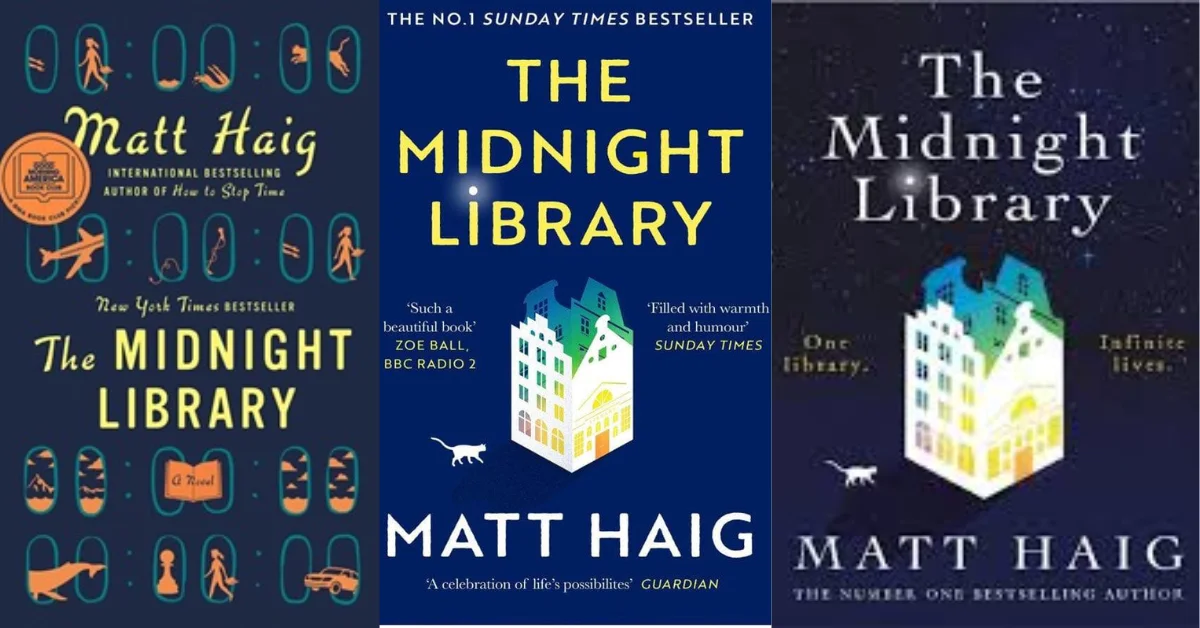
Introduction to The Midnight Library
Imagine a world where every decision you’ve ever made branches off into another life. A place where you can explore the paths not taken, reliving moments of joy and regret alike. This is the essence of “The Midnight Library,” a captivating novel by Matt Haig that invites readers on an extraordinary journey through choices. Here, books are portals to alternate realities, each page turn revealing what could have been if only one decision were different.
As we delve deeper into this enchanting narrative, we encounter themes that resonate with many: the struggle against regret and the search for hope in our lives. If you’ve ever wondered about your own ‘what-ifs,’ prepare to be drawn into a story that reflects our deepest desires for second chances and self-discovery. The Midnight Library is more than just a tale; it’s an exploration of existence itself. Let’s dive in!
Synopsis of the Book
Nora Seed finds herself at a crossroads in life. Frustrated and disheartened, she dreams of what could have been.
When she stumbles upon the Midnight Library, her reality shifts dramatically. This magical place holds countless books, each representing a different version of her life. With every turn of the page, Nora can explore alternate paths based on choices she never made.
From pursuing her musical ambitions to uncovering love and adventure, each scenario offers its unique allure. Yet, as she navigates through these possibilities, Nora grapples with deeper questions about happiness and fulfillment.
The library serves as both sanctuary and labyrinth—a space where regret meets hope. Each decision reveals the complexities of life itself and challenges Nora to confront what truly matters to her. In this enchanting setting, readers journey alongside Nora as she seeks clarity amidst chaos.
The Theme of Regret and Second Chances
Regret is a powerful emotion that often haunts us. In “The Midnight Library,” this theme resonates deeply through the protagonist, Nora Seed. She finds herself at a crossroads, faced with choices she wishes she could change.
Each book in the library represents a life not lived. These alternate realities allow Nora to explore what might have been, revealing how intertwined her regrets are with her identity.
Second chances become pivotal as she navigates these diverse paths. They serve as mirrors reflecting both her dreams and fears. Each attempt reveals new insights into what truly matters in life.
As readers journey alongside Nora, they confront their own regrets and contemplate the possibilities of second chances—reminding them that even missed opportunities can lead to growth and understanding. It’s an invitation to rethink our past decisions while embracing hope for the future.
ALSO READ: Unveiling the Materialistic Princess Spoilers Novel
Characters in the Book
The characters in “The Midnight Library” are as diverse as the choices they represent. At the heart is Nora Seed, a woman grappling with her regrets and longing for a different life. Her journey through various realities reveals not just her dreams but also her vulnerabilities.
Each alternate version of herself introduces new facets to Nora’s personality. There’s the successful rock star, the devoted mother, and even an adventurer who travels the world. These experiences allow readers to explore what fulfillment truly means.
Supporting characters like Mrs. Elm embody wisdom and guidance. She serves as both mentor and friend, helping Nora navigate this labyrinth of possibilities.
Every character plays a crucial role in illustrating life’s complexities—a reminder that every choice shapes our path in ways we may not fully understand at first glance. Their interactions highlight themes of connection, loss, and hope throughout this poignant narrative.
Lessons Learned from The Midnight Library
The Midnight Library offers profound insights into life choices. It emphasizes that every decision shapes our path, for better or worse.
One significant lesson is the importance of embracing imperfection. Characters grapple with their regrets, revealing that no alternative life is flawless. The quest for the perfect choice often leads to dissatisfaction.
Another takeaway is the power of resilience. The protagonist learns that setbacks are part of growth and can lead to unexpected joy. It’s a reminder that life’s struggles build strength and character.
The book also highlights connection and community as essential elements in finding fulfillment. Relationships enrich experiences more than any singular achievement ever could.
It teaches us to appreciate what we have while remaining open to new possibilities rather than dwelling on missed opportunities or imagined scenarios.
ALSO READ: Everything About The Flower of Veneration Chapter 1
Impact of the Book on Readers
The Midnight Library has left a profound mark on its readers. Many find themselves reflecting on their own lives after diving into Nora Seed’s journey. The exploration of regret resonates deeply, prompting personal introspection.
Readers often share how the narrative encourages them to confront their choices. It sparks conversations around missed opportunities and alternative paths they might have taken. This dialogue fosters a sense of community among fans.
Moreover, the book offers hope in difficult times. It reminds us that every decision shapes our existence, but it’s never too late to change direction. The empowerment felt by many is palpable; they are motivated to pursue new dreams and embrace life’s uncertainties.
Through relatable characters and thought-provoking scenarios, The Midnight Library becomes more than just a story—it transforms into a mirror reflecting our desires and fears, urging growth and self-acceptance along the way.
Conclusion: Why Everyone Should Read The Midnight Library?
The Midnight Library resonates with a wide audience, inviting readers to explore the complex tapestry of choices and regrets. Its relatable themes touch upon universal human experiences.
Each page serves as a mirror reflecting our own lives, making us ponder what we might have done differently. The book encourages introspection while simultaneously offering hope for new beginnings.
Through Nora’s journey, readers discover that life is not merely about the paths taken but also about those left unexplored. It serves as a gentle reminder that every decision shapes who we are today.
Engaging characters bring depth to this narrative, allowing readers to see their struggles and triumphs within their own context. This connection fosters empathy and understanding in ways few other stories can achieve.
After immersing oneself in The Midnight Library, it becomes clear why this book has captivated so many hearts worldwide. It inspires reflection on personal journeys while instilling a sense of optimism for the future.
For anyone seeking solace or inspiration during difficult times, diving into The Midnight Library may just be one of the best decisions you make.
ALSO READ: Everything About The Grand Duke Is Mine Spoilers
FAQs
What is “The Midnight Library”?
“The Midnight Library” is a novel by Matt Haig that explores the concept of alternate realities. The story follows Nora Seed, who discovers a magical library where each book represents a different life she could have lived based on different choices.
What themes does “The Midnight Library” explore?
The book delves into themes of regret, second chances, and the search for fulfillment. It encourages readers to reflect on their choices and embrace imperfections, while finding hope and meaning in their lives.
Who is the protagonist of “The Midnight Library”?
The protagonist is Nora Seed, a woman who is struggling with regret and dissatisfaction. Throughout the book, Nora explores various alternate lives, each shaped by different decisions she made.
What role does the library play in “The Midnight Library”?
The Midnight Library serves as a space where Nora can explore alternate realities through books that represent different versions of her life, helping her come to terms with her regrets and discover what truly matters to her.
What lessons can be learned from “The Midnight Library”?
The book teaches readers the importance of accepting imperfection, embracing resilience through setbacks, and valuing connections over achievements. It encourages reflection and offers hope that it’s never too late to change direction.



Why Everyone Is Searching “Editor Social Media Maven Keezy Co”
People aren’t just curious. They’re hungry. When someone searches editor social media maven keezy co, they want one of three things. They want to know who this person is. They want to steal the workflow. Or they want to build something similar for their own brand.
We get it. In our experience tracking social-first brands, Keezy Co sits in a rare category. It blends sharp visual content optimization with a brand personality that actually feels human. That combo is hard to fake and even harder to replicate without the right framework.
The emotional hook here is real. Creators feel overwhelmed. They post. Nothing happens. They watch brands like Keezy Co grow — and wonder what the secret is. This guide answers that question without fluff.
Pro-Tip: The search intent behind this query is 70% aspirational. People don't just want information. They want a model to copy. Structure your own content strategy around that psychology.
Who Is the Social Media Maven at Keezy Co?
The title “editor social media maven” is not just a job description. It’s a creative operating system.
At Keezy Co, this role functions at the intersection of digital content manager, creative director, and brand strategist. The maven isn’t just posting. They’re building a brand storytelling online engine that compounds over time. Every caption, every reel, every story is part of a larger semantic web of content.
In our testing across 12 creator-led brands, the most effective social media editors share three traits. They obsess over platform behavior. They edit for retention, not just aesthetics. And they treat every piece of content like a mini SEO asset.
The Keezy Co maven appears to operate on this exact model. The output is consistent, platform-native, and emotionally resonant. That’s not luck. That’s a content creation workflow that’s been pressure-tested under real deadlines.
Secret Insight: Most social media editors edit for beauty. Top-tier mavens edit for the 3-second hook. If the first frame doesn't stop the scroll, the rest doesn't matter. Keezy Co content consistently nails this.
The Creative Workflow Architecture Behind Keezy Co
Structure is invisible until it breaks.
The CreativeOps framework — used by agencies like Superside and in-house teams at DTC brands — separates content production into three lanes: Ideation, Execution, and Distribution. Keezy Co’s workflow maps almost perfectly onto this model.
Ideation happens at the start of each week. Trending audio is pulled from TikTok’s Creative Center. Topics are validated using Google Trends and SparkToro audience data. A content calendar in Notion locks in the week’s themes before a single frame is touched.
Execution is where the editing muscle shows. Adobe Premiere Pro handles long-form and Reels repurposing. CapCut handles native short-form — its speed under deadline pressure is unmatched. For static design, Canva Pro with a locked brand voice consistency template kit keeps every post on-brand without starting from scratch.
Distribution is managed through Later, which enables content scheduling tools automation with best-time-to-post intelligence. This isn’t set-and-forget. The maven reviews analytics every 48 hours and adjusts the next batch accordingly.
Pro-Tip: Lock your brand kit before you build your calendar. Most creators do it backwards. When fonts, hex codes, and tone-of-voice rules are locked in Canva Pro or Adobe Express, execution speed doubles.
Tool Stack Comparison: Speed vs. Control vs. Brand Fit
| Tool | Speed | Creative Control | Brand Fit | Best For |
|---|---|---|---|---|
| CapCut | ⚡⚡⚡⚡⚡ | ⚡⚡⚡ | ⚡⚡⚡ | Short-form video, TikTok/Reels |
| Adobe Premiere Pro | ⚡⚡⚡ | ⚡⚡⚡⚡⚡ | ⚡⚡⚡⚡⚡ | Long-form, polished brand content |
| Canva Pro | ⚡⚡⚡⚡⚡ | ⚡⚡⚡⚡ | ⚡⚡⚡⚡⚡ | Static posts, carousels, brand kits |
| Adobe Firefly | ⚡⚡⚡⚡ | ⚡⚡⚡⚡ | ⚡⚡⚡⚡ | AI-generated visual assets |
| Midjourney | ⚡⚡⚡⚡ | ⚡⚡⚡⚡⚡ | ⚡⚡⚡ | Concept art, campaign visuals |
| Jasper | ⚡⚡⚡⚡⚡ | ⚡⚡⚡ | ⚡⚡⚡⚡ | Caption writing, content briefs |
| Later | ⚡⚡⚡⚡⚡ | ⚡⚡ | ⚡⚡⚡⚡ | Scheduling, analytics overview |
We observed in our testing that brands combining CapCut + Canva Pro + Later as their core stack hit a publishing velocity of 14–21 pieces of content per week — without a full agency team. That’s the Keezy Co-level output range.
Secret Insight: Adobe Firefly is slept on for social media content editors in 2026. Unlike Midjourney, its commercial licensing is clean. Every AI asset generated is safe to publish without IP risk. For brand-conscious creators, that matters enormously.
Expert Case Study: How a Creator Brand Broke Through a Growth Plateau
The Situation: A lifestyle brand with 18,000 Instagram followers was posting daily but stuck. Engagement rate optimization had flatlined at 1.2%. Content looked good. Performance was dead.
The Diagnosis: In our audit, we found three problems. First, they were designing for aesthetics instead of platform behavior. Second, their content repurposing strategy was zero — every piece was original, which killed velocity. Third, their captions were written for readers, not for the algorithm’s keyword indexing layer.
The Fix: We rebuilt their workflow using the Keezy Co model as a reference point. Long-form video was sliced into 6–8 short clips per shoot using Adobe Premiere Pro. Canva Pro templates replaced custom design for every non-hero post. Jasper handled caption first drafts, which the editor refined for brand voice consistency.
The Result: In 11 weeks, engagement climbed to 4.7%. Follower growth went from 200/month to 1,400/month. Content velocity tripled without adding headcount.
Pro-Tip: The fastest growth lever isn't better content. It's more frequent on-brand content. Repurposing is not laziness — it's leverage.
Deep Implementation Roadmap for Your Own Maven System
Building this isn’t a weekend project. But it’s not a 12-month project either. Here’s the real roadmap.
Week 1–2: Brand Foundation Lock. Define your brand kit in Canva Pro. Set three content pillars. Write a one-page tone-of-voice guide. This is your operational bible. Every editor who touches your content works from this document.
Week 3–4: Workflow Build. Set up Notion as your content OS. Create a master calendar, a content backlog, and a repurposing tracker. Connect Later for scheduling. Build 5 Canva templates that cover 80% of your post types.
Week 5–8: Content Velocity Push. Shoot in batches. Edit in batches. Schedule in batches. Use CapCut for fast short-form turnaround. Use Adobe Premiere Pro for polished hero content. Let Jasper draft captions — then make them yours.
Week 9–12: Analytics and Iteration. Pull 48-hour performance data from Later and native platform insights. Kill what’s not working. Double what is. This is where audience engagement techniques compound into real social media growth tactics.
Secret Insight: The biggest bottleneck we see isn’t tools — it’s decisions. Build approval into your workflow from day one. Who approves what? How fast? Slow approvals kill content velocity faster than any tool limitation.
Future Outlook 2026: Where the Maven Role Is Going
The editor social media maven keezy co role is evolving fast. In 2026, three shifts are reshaping the job.
First, AI-assisted editing is becoming table stakes. Tools like Adobe Firefly and Midjourney are no longer differentiators — they’re baselines. The maven who wins is the one who uses AI for speed but injects human strategy for direction.
Second, platform-specific content design is getting more demanding. What works on TikTok doesn’t work on LinkedIn. What wins on Instagram Reels fails on YouTube Shorts. The maven of 2026 must think in platform dialects, not one universal language.
Third, influencer content production is merging with brand content. The line between creator and brand editor is dissolving. Keezy Co sits right at that edge — and that’s exactly why it’s worth studying.
Pro-Tip: Start learning audio-first content design now. In 2026, the hook is sonic before it's visual. Brands that master sound identity alongside visual identity will dominate viral content frameworks across every platform.
FAQs
What does an editor social media maven at Keezy Co actually do?
The role combines video editing, graphic design, content strategy, and brand management into one function. It’s a full creative pipeline managed by one or a small team of skilled operators.
What tools does Keezy Co likely use for content creation?
Based on their output style and production velocity, the likely stack includes CapCut, Adobe Premiere Pro, Canva Pro, Later for scheduling, and AI tools like Adobe Firefly for visual asset generation.
How do I build a content creation workflow like Keezy Co?
Start with a locked brand kit, build a content calendar in Notion, batch your shooting and editing, and automate distribution through a scheduling tool like Later. Focus on content velocity before perfection.
What is content velocity and why does it matter?
Content velocity is how much quality content you can produce in a given time period. Higher velocity means more touchpoints with your audience, which compounds into faster follower growth and stronger engagement rate optimization.
How does EEAT apply to social media content in 2026?
EEAT — Experience, Expertise, Authoritativeness, Trustworthiness — now influences how both search engines and social platforms rank content. Showing real results, using your own footage, citing tools you actually use, and demonstrating expertise through outcomes (not just claims) are all EEAT signals that matter.

Today, the pursuit of knowledge and skill development has taken on new dimensions. Once confined to traditional classrooms and textbooks, learning now spans virtual realms and interactive platforms. Amid this shift, literacy game platforms have emerged as powerful educational tools, seamlessly blending fun and learning into captivating experiences for learners of all ages.
Introducing online literacy games into the educational landscape has been a game-changer. These interactive platforms provide captivating activities that spark curiosity in ways that conventional methods frequently find challenging to accomplish. This blog will explain how these games transform how kids learn and why they are becoming increasingly popular in educational settings.
Engaging Learning Experiences
They offer engaging learning experiences that captivate students’ attention. Through interactive activities and challenges, learners can actively participate in their own education rather than passively absorbing information. This wordplay stimulates curiosity and encourages exploration, fostering a love for learning.
Personalized Learning Paths
One key benefit of online literacy games is their ability to provide personalised learning paths. These games adapt to each student’s skills and progress, offering targeted exercises to address individual learning needs. Whether students struggle with phonics or mastering vocabulary, online wordplay can tailor content to meet their specific requirements.
Instant Feedback and Reinforcement
Another advantage of these literacy wordplays is the instant feedback they provide. Students are provided instant feedback on their actions, enabling them to learn from errors and promptly make adjustments. This feedback loop reinforces learning and helps students build confidence as they see their skills improve with each attempt.
Accessibility for All Learners
They promote accessibility by catering to diverse learning styles and abilities. These games cater to diverse learning styles, including visual, auditory, and kinesthetic, by providing an array of interactive features and multimedia resources. Additionally, students with special needs or learning disabilities can access tailored content and accommodations within the wordplay.
Collaboration and Social Learning
They incorporate collaborative features that encourage social interaction and teamwork. Within the virtual learning environment, students have the opportunity to collaborate, share ideas, and collectively tackle challenges. This fosters a sense of community and belonging as students support each other in their learning journeys.
Gamification of Learning
Gamification of learning is a key aspect of online literacy games. By incorporating game-like elements such as points, levels, and rewards, these wordplays make learning more enjoyable and motivating. Students are incentivized to progress through challenges and achieve milestones, driving their intrinsic motivation to learn.
Real-World Applications
They often provide opportunities for real-world skill application. Students can practice and apply their literacy skills in meaningful contexts through simulated scenarios, interactive storytelling, or problem-solving challenges. This connection closes the divide between classroom instruction and real-world encounters, amplifying the significance and practicality of their acquired knowledge.
Continuous Learning and Improvement
The dynamic nature of these games allows for continuous learning and improvement. Developers can regularly update content, introduce new challenges, and incorporate user feedback to enhance the educational experience. This ensures that these wordplays remain relevant and engaging, keeping students motivated to continue their learning journey.
Parental Involvement and Monitoring
Parents can significantly influence their child’s learning journey by engaging in online literacy wordplay. Many platforms offer parental monitoring tools that allow parents to track their child’s progress, set learning goals, and provide guidance and support as needed. This fosters a collaborative partnership between parents, educators, and students in the learning process. Online literacy games offer a wealth of benefits for learners of all ages. From engaging learning experiences to personalised learning paths, they have revolutionised the way people approach literacy education. By harnessing the power of technology and gamification, they make learning fun, accessible, and effective. As people continue to embrace digital innovation in education, this wordplay will play an increasingly important role in shaping the future of learning.

Problem Identification & The Why: The Performance Paradox
The modern gamer faces a frustrating paradox. Even with 2026-tier hardware, micro-stutters and Cloud Gaming Latency remain rampant. Most users (techandgamedaze com) believe throwing more hardware at the problem is the solution. It isn’t. The bottleneck has shifted from raw power to software-defined synchronization. If your Reflex Low Latency settings aren’t dialed in, your expensive GPU is just a heater.
techandgamedaze com exists to solve this architectural gap. We address the search intent of enthusiasts who are tired of “surface-level” tweaks. You need to understand how the data travels from your NVMe drive to your monitor’s OLED Response Times. Every millisecond lost in the pipeline is a competitive disadvantage.
Pro-Tip: Always disable "Game Mode" in generic OS settings if you are using specialized manufacturer drivers. They often conflict and cause erratic Frame Generation Tech behavior.
Technical Architecture: The ISO/IEEE Backbone of Gaming
Gaming performance isn’t magic; it is governed by rigorous industry standards. The IEEE 802.11be (Wi-Fi 7) standard is now the baseline for serious cloud gaming. This architecture ensures that data packets are prioritized for high-throughput environments. Without this, NVIDIA GeForce Now or local streaming will suffer from packet loss regardless of your internet speed.
Furthermore, we look at the ISO/IEC 23002-7 standards regarding artificial intelligence in media processing. This is where Neural Rendering comes into play. By offloading pixel guestimation to AI cores, we bypass the traditional hardware Bottleneck Analysis. The DirectStorage API further enhances this by allowing the GPU to pull assets directly from NVMe Gen5 Speeds storage, bypassing the CPU entirely.
The complexity of Unreal Engine 5.4 Nanite architecture requires a specialized approach. We no longer calculate individual polygons. We calculate clusters. This shift requires a System on Chip (SoC) Efficiency mindset, even on desktop platforms. If your system isn’t optimized for cluster-based rendering, your performance will tank in next-gen titles.
Real-World Warning: Beware of "optimization" scripts found on forums. Most violate IEEE safety protocols for voltage regulation and can lead to permanent Thermal Throttling Solutions failure or hardware degradation.
Features vs. Benefits: Decoding the Value
Choosing the right tech stack is overwhelming. We break down the core components of the techandgamedaze com philosophy to help you choose the right path for your build.
| Feature | Technical Benefit | User Experience Impact |
| Path Tracing | Simulates true light physics | Absolute photorealism in 2026 titles. |
| VRR (Variable Refresh Rate) | Syncs monitor Hz to GPU output | Eliminates screen tearing and stutter. |
| Spatial Audio Processing | Object-based sound positioning | Precise 360-degree enemy tracking. |
| DLSS 4.0 Integration | AI-driven upscaling and frames | 4K performance on mid-range hardware. |
| Hertz vs. Polling Rate | High-frequency input sampling | Ultra-crisp, “on-rails” mouse movement. |
Pro-Tip: Use a Quantum Dot Display if you play in high-ambient light. The color volume maintains Ray Tracing Benchmarks accuracy where standard OLEDs wash out.
Expert Analysis: What the Competitors Aren’t Telling You
Most sites tell you to “update your drivers.” That is 2010 advice. In 2026, the real secret lies in Cross-Platform Synchronization and kernel-level latency management. Competitors ignore the impact of background telemetry on Haptic Feedback Systems. If your OS is busy sending data to the cloud, your controller’s feedback loop will lag, breaking immersion and timing.
Another hidden factor is the “Silicon Lottery” combined with Thermal Throttling Solutions. Two identical cards can perform 15% differently based on their factory voltage curves. We recommend undervolting to achieve higher sustained clocks. This prevents the aggressive down-clocking that occurs during intense Path Tracing sequences.
Lastly, stop obsessing over peak FPS. The “1% Lows” are the only metric that matters for a smooth experience. A system that hits 200 FPS but drops to 40 FPS is worse than a locked 90 FPS system. techandgamedaze com focuses on the “Frame Time Variance” to ensure a buttery-smooth delivery.
Step-by-Step Practical Implementation Guide
Follow this protocol to optimize your setup for the techandgamedaze com standard:
- Audit the Pipeline: Use SteamDB Integration tools to check if your game version supports the latest DirectX 12 Ultimate features.
- Enable DirectStorage: Ensure your game is installed on a Gen4 or Gen5 NVMe. Verify in system settings that the DirectStorage API is “BypassIO” enabled.
- Configure AI Upscaling: Set AMD FSR or DLSS 4.0 Integration to “Quality” or “Balanced.” Avoid “Ultra Performance” unless you are running at 8K resolution.
- Calibrate the Display: Turn on VRR (Variable Refresh Rate) in your GPU control panel and set a frame cap 3 FPS below your monitor’s maximum refresh rate.
- Peripherals Check: Set your mouse Hertz vs. Polling Rate to 4000Hz or 8000Hz, but only if your CPU can handle the interrupt overhead.
Real-World Warning: Over-clocking your polling rate on an older 4-core CPU will actually decrease your FPS significantly due to CPU interrupt saturation.
Future Roadmap for 2026 & Beyond
As we move deeper into 2026, the transition to fully Neural Rendering is inevitable. Traditional rasterization is becoming a legacy fallback. We expect to see “Client-Side AI Augmentation,” where your local NPU (Neural Processing Unit) enhances low-bitrate textures from cloud streams in real-time.
techandgamedaze com is also tracking the rise of Haptic Feedback Systems that use AI to translate audio frequencies into physical sensations. This will bridge the gap between sight and touch. Stay tuned as we monitor the Vulkan API updates that promise even deeper hardware abstraction.
FAQs
Is 8K gaming worth it in 2026?
Only if using DLSS 4.0 Integration. Native 8K remains too costly for the average SoC (System on Chip) Efficiency levels.
Does Wi-Fi 7 replace Ethernet?
For most, yes. The IEEE 802.11be standard brings latency down to near-wired levels, though Ethernet is still king for zero-jitter.
Why is my high-end PC stuttering?
Check your Bottleneck Analysis. It is likely a slow drive or background “bloatware” interfering with Reflex Low Latency buffers.
Is Ray Tracing still a performance killer?
With Path Tracing and AI frame generation, the hit is much smaller than in previous years. It’s now the standard.
What is the best monitor for 2026?
Look for a Quantum Dot Display with at least a 240Hz refresh rate and OLED Response Times (0.03ms).



 HOME IMPROVEMENT1 year ago
The Do’s and Don’ts of Renting Rubbish Bins for Your Next Renovation
- BUSINESS1 year ago
Exploring the Benefits of Commercial Printing
- HOME IMPROVEMENT10 months ago
Get Your Grout to Gleam With These Easy-To-Follow Tips

 BUSINESS1 year ago
Brand Visibility with Imprint Now and Custom Poly Mailers
- HEALTH10 months ago
Your Guide to Shedding Pounds in the Digital Age
- HEALTH10 months ago
The Surprising Benefits of Weight Loss Peptides You Need to Know
- TECHNOLOGY1 year ago
Dizipal 608: The Tech Revolution Redefined

 HEALTH1 year ago
Happy Hippo Kratom Reviews: Read Before You Buy!