LAW
7 Common Bail Bondsman Practices


A bail bondsman is a professional who helps defendants post bail in the event of an arrest. They assist their clients in securing release from jail by paying the bail amount for them. Bondsmen charge a non-refundable fee for their services, usually a percentage of the total bail amount. Here are some standard practices of bail agents:
1. Maintaining Records and Compliance
The bail agent must accurately record all clients and transactions per state laws. This includes the defendant’s personal information, charges against them, bond amount, payment records, and other relevant details. They also have to comply with strict regulations set by the state where they are licensed. Depending on the state, bail bond agents follow compliance procedures and participate in continuing education to stay up-to-date on any regulation changes.
2. Assessing Risk and Eligibility
Before posting bail for a client, a bail bondsman must assess the risk associated with the defendant. They determine if the defendant will likely flee or fail to appear in court. This involves gathering information about the defendant’s criminal history, flight risk, and ties to the community. A bail agent may also require a current paycheck stub and state-issued ID card for eligibility. The requirements may vary from state to state. The defendant’s likelihood of attending court proceedings builds confidence for the bail agent to post a bond.
3. Setting Bail Amounts
When a judge sets a bail amount, it is usually based on the severity of the crime and any prior criminal history. Using this information, a bail agent can decide how much to charge for their services. They also take into account the defendant’s financial situation and ability to pay. The bail bond premium is usually set at a percentage of the total bail amount. The defendant or their family must pay this premium to the agent, who then posts the full amount to secure the defendant’s release.
4. Executing the Bail Bond Agreement
Once the bail agent has assessed the risk and set the bail amount, they will contract with the defendant, co-signer, or family member. A bail bond agreement outlines the terms of release and all parties’ responsibilities. The defendant must agree to appear, follow all court requirements, and make payments on time. A co-signer or family member agrees to confirm the defendant’s compliance with the bail bond agreement.
5. Providing Documentation to the Court
The court requires a bail agent to submit certain documents and evidence before posting the bond. These may include proof of employment, income, and residence for the defendant and co-signer. The bail agent is expected to provide a copy of the bail bond agreement and any other necessary forms required by the court. This documentation helps clarify all parties’ responsibilities to comply with the terms of release. It assures the court that the defendant and co-signer are reliable and trustworthy individuals.
6. Conducting Fugitive Recovery
In some cases, defendants may fail to appear in court as required by the bail bond agreement. If this happens, the bail agent has a responsibility to locate and return the defendant to court. Bail agents are trained professionals working with law enforcement agencies and have legal authority to track and apprehend fugitives. Using specialized techniques and tools, they must act swiftly and efficiently to bring the defendant back into custody. When this happens, the bail bond agreement is forfeited, and the court may issue a warrant for the defendant’s arrest.
7. Planning for Bail Bond Forfeiture
Bail bond forfeiture happens if a defendant breaks their promise by not attending court or violating agreement terms and payment commitments. They may explore alternative solutions with the defendant, like negotiating payment plans or requesting bail reduction from the court. The bail bond agreement ends, and the co-signer may be liable for any outstanding payments or fees owed to the court.
Choose a Reliable Bail Bondsman
Working with a bail bondsman has several benefits for both the defendant and the co-signer. It provides a convenient and affordable way to secure the defendant’s release from jail. A bail agent has the proper knowledge and resources to handle the bail process efficiently, saving time. They thoroughly understand the legal system and provide guidance and support throughout the process. Contact a bail bond company for more information on their services and how they can assist you in securing your loved one’s release from custody.



Sydney, as a major global city, grapples with various social issues, including the impact of illicit drug use, which poses challenges to public health, law enforcement, and community safety. Navigating the legal landscape after being charged with drug-related offences can be daunting and complex, particularly in a city with stringent laws like Sydney.
In such situations, securing the services of a drug lawyer Sydney becomes crucial. These law professionals are equipped with the specialised knowledge and experience necessary to handle the nuances of drug laws effectively. This article delves into why it is imperative to have a robust defence when facing narcotics charges in Sydney, outlining the benefits of expert judicial guidance and its impact on the outcome of your case.
Complexity of Drug Laws
Narcotics laws in Sydney are complex and carry severe penalties for breaches. Without a profound understanding of these laws, individuals may find themselves at a significant disadvantage. A drug lawyer will have a detailed grasp of state and federal narcotics legislation, including recent updates and changes in the judicial landscape. This expert knowledge is vital for ensuring that all judicial avenues for defence are explored and utilised effectively, protecting the client’s rights throughout the judicial process.
Building a Strong Defense Strategy
A strong defence strategy is critical in any criminal case, especially dope charges, often fraught with intricate law and procedural nuances. A narcotics lawyer in Sydney will meticulously analyse the evidence presented, challenge any procedural errors, and consider all aspects of the case, from the legality of the narcotics search and seizure operations to the actual possession and intent. This comprehensive approach ensures the crafting of a solid defence strategy that aims to achieve the best outcome, be it a reduction in charges, acquittal, or a more lenient sentence.
The Importance of Expert Legal Advice
Expert law advice is indispensable in the realm of criminal defence. This expertise becomes even more critical when dealing with dope charges, as the consequences of a conviction can be life-altering. A narcotics lawyer in Sydney can provide crucial advice on the potential outcomes of the case based on their experience and understanding of similar cases. They can also guide clients through decisions that affect the case, such as whether to enter a plea or go to trial, ensuring that clients make informed choices based on comprehensive judicial insights.
Navigating the Court System
The court system can be intimidating, with its strict procedures and protocols. Understanding and navigating these procedures can be difficult for someone without legal training. A narcotics lawyer in Sydney is not only familiar with the workings of the court system but also has practical experience in maneuvering through complex judicial processes. This experience is vital in ensuring that the case is handled efficiently and that any legal opportunities for defence are noticed.
Mitigating the Consequences of a Conviction
Beyond the immediate legal battle, a narcotic conviction can have long-lasting repercussions on an individual’s life, affecting employment opportunities, social relationships, and even international travel. A drug lawyer in Sydney who can effectively mitigate these consequences is essential. Through skilled negotiation and advocacy, a lawyer can work towards reducing penalties, securing alternative penalties, or obtaining a conditional release, which significantly lessens the impact of a conviction on the client’s future.
The necessity of having a competent legal defence for narcotics charges in Sydney cannot be overstated. From understanding the intricate dope laws to navigating the court system and building a solid defence strategy, a solicitor in Sydney is pivotal in the outcome of such cases. Expert legal advice not only aids in effectively handling the case but also in mitigating the potential long-term consequences of a drug charge conviction. For anyone facing these charges, investing in skilled legal representation from a reputable law firm is critical to safeguarding their future.

Having concrete proof is crucial in constructing a robust personal injury claim. This proof serves as the basis for legal evidence. In the modern era, where data rules, claimants must thoroughly gather pertinent evidence. Capturing rapid photos of the event’s location or saving destroyed belongings can enhance the strength of a legal argument. Moreover, digital proof, such as video recordings from security cameras or messages sent through electronic devices, can be essential in our evermore interconnected society. Acting swiftly to document and organize these specifics is crucial as they offer a comprehensive view of the incidents preceding the harm. This proof is essential because it supports the argument and provides a straightforward story.
Navigating the Legal Process: Tips from the Experts
Deciphering the legal maze can be a formidable challenge, but a seasoned personal injury lawyers in Philadelphia can illuminate the path toward justice. These experts can help one understand the complexities of the legal system, like meeting critical deadlines to file a claim and adroitly responding to counterarguments from opposing parties. These professionals bring a strategic edge to prosecuting your case and are adept at arbitration and settlement negotiations, striving to secure compensation that aligns with the gravity of your injury.
Medical Documentation and Professional Opinion
A comprehensive compilation of medical records is indispensable in personal injury claims. The medical documents show the causal link between the incident and resulting injuries. Ensuring that injuries, treatments, and recovery timelines are meticulously cataloged provides a factual basis for calculating damages. Securing detailed opinions from medical professionals can also fortify your claim, lending credibility and potentially influencing the appropriate compensation for the covered injuries and associated trauma.
Utilizing Technology: How Digitization Has Transformed Claims
Digitization has revolutionized the way personal injury claims are managed. Apps specifically designed to collate medical documents and expense receipts or platforms that enable seamless communication with your attorney are prime examples of technology serving the legal field. This level of integration and efficiency has shifted the landscape, making formerly cumbersome tasks like document filing and status updates more accessible and transparent. Introducing such advancements in the personal injury arena ensures cases move forward with greater precision and speed toward resolution.
Understanding Comparative Negligence and Its Impact on Your Claim
Within personal injury law, comparative negligence is both intricate and influential. This principle implicates the assessment of fault amongst involved parties, which can profoundly shape the outcome of a claim. In this system, compensation awarded typically reflects one’s degree of fault, making it vital for claimants to delineate clear-cut evidence of the other party’s predominant responsibility. An insightful review of comparative negligence — and how it functions in various jurisdictions — is essential for anticipating its impact on your potential recovery.
Maximizing Your Claim Despite Comparative Negligence
An adept approach to dealing with comparative negligence involves orchestrating a strong evidentiary base to affirmatively showcase the other party’s more significant share of fault. This entails an extensive compilation of proof, from accident reports to expert testimonies, to convincingly argue against reductions in your deserved compensation due to partial responsibility. Strategic forethought in addressing the comparative negligence system can significantly sway the compensatory sum in the claimant’s favor.
The Importance of Legal Representation in Claiming Compensation
The journey to securing rightful compensation is one strewn with legal intricacies. Succinctly put, the counsel of an experienced personal injury attorney becomes indispensable. Such professionals’ role extends beyond mere legal advice; they become your advocates, negotiators, and, if need be, representatives in the corridors of justice. Their intricate knowledge of personal injury law and tactical understanding renders them invaluable allies in fighting for your rights and a fair settlement.
Settlement Negotiations: Techniques for Maximizing Payouts
Approaching settlement negotiations is tactical and necessitates a mix of assertiveness, patience, and clarity. A claimant’s ability to cogently argue the valuation of their case, bolstered by robust evidence and skilled advocacy, can prompt insurers to offer a just settlement. Being open to negotiation yet steadfast in pursuing what is fair often yields the best outcomes. It’s a delicate balance between readiness to compromise and holding firm to a valuation grounded in the actual costs and impacts of sustained injuries.

During the bustling summer months, European airlines face a surge in flight delays due to various factors ranging from increased passenger volumes to adverse weather conditions and air traffic congestion. To manage these disruptions effectively, airlines employ a range of strategies aimed at minimizing inconvenience to passengers while adhering to regulatory requirements.
European Airlines Handling Flight Delays During Busy Summer Months
- Proactive Communication: Airlines prioritize keeping passengers informed about delays through email, SMS, or mobile apps. This includes updates on the cause of the delay, estimated duration, and rebooking options to reduce uncertainty and frustration.
- Rebooking and Rerouting: Airlines swiftly work to rebook affected passengers on alternative flights. Despite challenges during peak seasons, airlines utilize advanced algorithms and dedicated staff to optimize the rebooking process and minimize disruptions to travel plans.
- Compensation and Assistance: EU regulations, notably EU Regulation 261/2004, ensure passengers’ rights to compensation for flight delays. This includes provisions for meals, refreshments, and accommodation, alongside reimbursement or alternative transportation options.
- Operational Adjustments: Airlines implement operational changes to mitigate delays, such as optimizing ground handling procedures and collaborating with air traffic control to minimize congestion at airports.
- Flexibility in Scheduling: Airlines maintain flexibility in scheduling practices to accommodate disruptions. This may involve creating buffer times between flights or adjusting departure and arrival times to manage capacity and minimize the impact of delays.
Despite these efforts, flight delays can still significantly impact passengers, leading to missed connections, disrupted travel plans, and stress, particularly during busy summer months. Prolonged delays may also affect passengers’ perception of airline reliability and customer service quality.
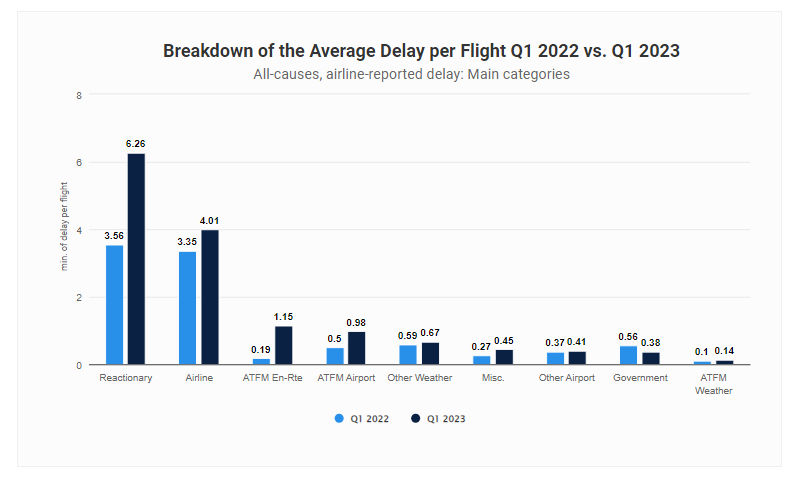
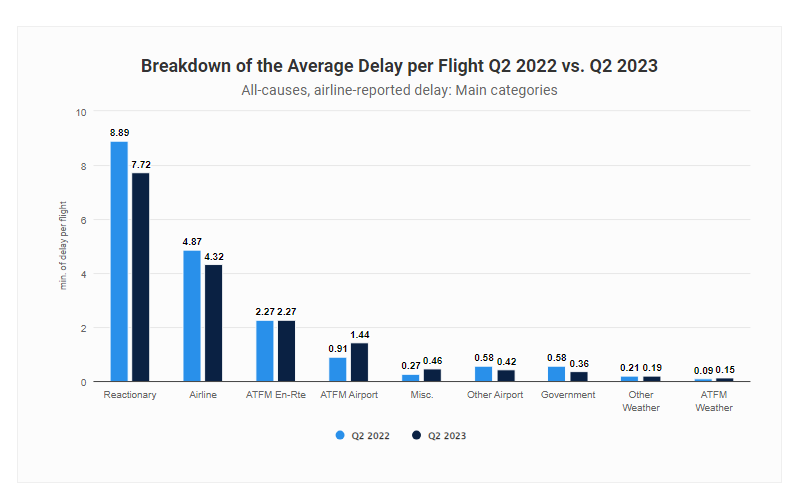
Flight Statistics Europe Airlines in 2022 VS 2023
Below is the breakdown of the average delay per flight in the first and second quarter of 2022 compared to 2023 revealing significant insights into air travel punctuality.
Source: Eurocontrol
Flight Delay Impact On Passengers During Busy Summer Months
Flight delays during the busy summer months can have significant impacts on passengers, ranging from inconvenience to financial losses and emotional stress. Here’s how these delays affect passengers:
- Missed Connections: Passengers travelling during peak summer months often have connecting flights to catch. A delay in their initial flight can lead to missed connections, disrupting their entire travel itinerary. This can result in extended layovers, additional expenses for accommodation or meals, and frustration due to the disruption of their plans.
- Time Sensitivity: Many passengers flying during the summer has time-sensitive commitments such as business meetings, family gatherings, or vacation plans. A delay in their flight can jeopardize these commitments, leading to disappointment, stress, and potential financial losses if pre-booked activities or accommodations are affected.
- Financial Losses: Flight delays can result in financial losses for passengers, especially if they miss non-refundable bookings such as hotel reservations, tours, or event tickets. Additionally, passengers may incur extra expenses for meals, transportation, or alternative accommodations while waiting for their delayed flight.
- Emotional Stress: Dealing with flight delays during the busy summer season can be emotionally taxing for passengers. Uncertainty about when the flight will depart, coupled with crowded airports and long waiting times, can lead to heightened stress, anxiety, and frustration. This emotional toll is exacerbated when passengers are travelling with young children, elderly family members, or individuals with special needs.
- Impact on Vacation Experience: For passengers embarking on leisure travel during the summer, flight delays can significantly impact their vacation experience. Delays may eat into their precious vacation time, causing them to miss out on planned activities, sightseeing opportunities, or relaxation time at their destination. This can lead to disappointment and a diminished overall travel experience.
- Loss of Productivity: Business travelers facing flight delays may experience a loss of productivity as they wait for their flights to depart. This can result in missed meetings, delayed project deadlines, and decreased efficiency in their work responsibilities. Additionally, prolonged delays may require travelers to find makeshift workspaces in crowded airports, further impacting their productivity.
Flight delays during the busy summer months can have wide-ranging impacts on passengers, including missed connections, financial losses, emotional stress, and disruptions to travel plans. While airlines strive to minimize these impacts through proactive communication and assistance, delays remain an inherent risk of air travel, underscoring the importance of flexibility and preparedness for passengers when navigating the complexities of summer travel.
Some Relief to Passengers Due To Strict Regulation
Passengers experiencing flight disruptions, such as delays, cancellations, or denied boarding due to overbooked flights, find relief in certain regulations designed to protect their rights. In Europe, the EU Regulation 261/2004 stands as a cornerstone, ensuring passengers are entitled to various rights in such scenarios. Among these rights, one significant aspect is the eligibility for compensation, which ranges from 250 euros to 600 euros, which hinges on factors like the flight’s distance and the delay’s duration.
To be eligible for compensation, the following criteria must be met: the flight must experience a minimum delay of three hours, the departure must be from an EU airport or arrival at an EU airport under an EU-regulated flight, and importantly, the delay must be attributable to the airline rather than extraordinary circumstances like adverse weather or security threats.
Additionally, passengers are entitled to the right to care and assistance, whereby airlines are obligated to provide free meals, refreshments, and accommodation, when necessary, especially during extended delays.
How to Claim Compensation
In the event of flight delays covered by EC 261/2004, passengers should follow these steps to claim compensation:
- Record Keeping: Maintain detailed records of your flight, including your ticket number, flight number, and scheduled departure and arrival times. These records are essential when filing a compensation claim.
- Contact the Airline: Notify the airline promptly about the delay and inquire about your entitlement to compensation under EC 261/2004. Provide all relevant details and supporting documentation to strengthen your claim.
- Formal Claim Submission: If the airline does not offer compensation voluntarily, formally submit a claim in writing. Clearly outline the details of the disruption and your rights under EC 261/2004. Include copies of pertinent documents such as your ticket receipt and boarding pass.
Legal Assistance: If the airline rejects your claim or disputes your entitlement to compensation, consider seeking legal assistance from a reputable flight compensation claim company such as Claimflights or Flightright or the consumer rights organizations. They can provide expert guidance and support to help you navigate the claims process effectively.




 HOME IMPROVEMENT1 year ago
The Do’s and Don’ts of Renting Rubbish Bins for Your Next Renovation
- BUSINESS1 year ago
Exploring the Benefits of Commercial Printing

 BUSINESS1 year ago
Brand Visibility with Imprint Now and Custom Poly Mailers
- HOME IMPROVEMENT9 months ago
Get Your Grout to Gleam With These Easy-To-Follow Tips
- TECHNOLOGY11 months ago
Dizipal 608: The Tech Revolution Redefined
- HEALTH9 months ago
Your Guide to Shedding Pounds in the Digital Age
- HEALTH9 months ago
The Surprising Benefits of Weight Loss Peptides You Need to Know

 HEALTH12 months ago
Happy Hippo Kratom Reviews: Read Before You Buy!